

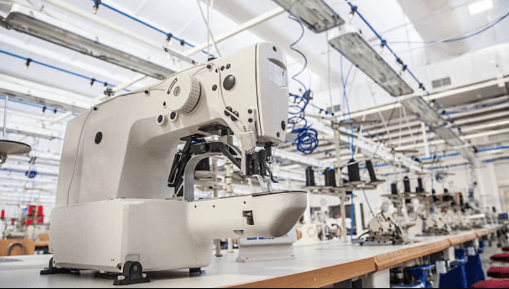
The transformation of the textile industry cannot be chronicled without paying homage to the pivotal role of the industrial sewing machine. Its inception and continual evolution have been at the forefront of manufacturing innovations, reshaping the landscape of fabrication and design. The industrial sewing machine has not only streamlined production processes but also provided incomparable precision and efficiency in the creation of garments and a myriad of other textile products.
The Genesis of the Industrial Sewing Machine
While the domestic sewing machine is a common fixture in many homes, its industrial counterpart is the linchpin of professional and large-scale garment production. It was during the 19th century that the first iterations of these durable, high-performance machines appeared, forever altering the efficiency of cloth-making.
The industrial sewing machine emerged as an answer to the burgeoning demand for clothing that accompanied the rise of urban centres and the expansion of global trade. This powerful innovation allowed textile factories to increase output while maintaining uniform quality – something that hand stitching could not match in terms of speed or consistency.
Advancements in Sewing Technology
Over the past two centuries, the technology behind industrial sewing machines has undergone significant refinements. From the basic lockstitch machines to the introduction of electronic and automated systems, these advancements have expanded the capabilities of what can be achieved in fabric manipulation.
Contemporary industrial machines now boast features such as computerised embroidery, programmable patterns, and the integration of artificial intelligence to further refine the sewing process. Manufacturers utilise these sophistications to produce intricate designs with impeccable precision that would be unachievable by hand.
Impact on Mass Production
The advent of the industrial sewing machine signalled a new era of mass production. It allowed manufacturers to produce large quantities of clothing and textiles significantly faster than manual labour. By servicing the rapidly growing demand created by a booming global population, the machine has helped the textile industry reach economies of scale unheard of in the pre-industrial era.
The efficiency of these sewing machines has also precipitated a reduction in costs, ultimately making clothing more affordable and accessible to a broad swath of the global population. This cost-effectiveness has been a vital factor for brands seeking to maintain competitiveness in an ever-Democratising marketplace.
Contribution to Quality and Consistency
Another transformative aspect of the industrial sewing machine is its contribution to the quality and consistency of products. Uniform stitches, strength in seams, and resilience of the garments or textiles are all attributes greatly enhanced by the use of a professional-grade sewing machine.
Consistency is critical, especially for brands that must ensure that every item they produce lives up to their reputation. Any variance in quality can tarnish a brand’s image, and the reliable operation of industrial sewing machines mitigates this risk substantially.
Customisation and Specialised Machines
In response to diverse needs within the textile industry, specialised industrial sewing machines have been developed for specific tasks. Leatherwork, shoe-making, upholstery, and heavy-duty textiles all require machines tailored to their unique demands. These customised machines enable industries to deliver specialised products with efficiency and precision.
From programmable machines that can automate complex patterns to sergers that create strong, overlocked seams, the options available to manufacturers today are as varied as they are impressive. This has opened up new opportunities for innovation and creativity in product design and manufacturing.
See also: Protect Your Home with Professional Security Installation
Eco-Friendly Innovations
The evolution of the industrial sewing machine also takes into account environmental concerns. With the growing emphasis on sustainability, manufacturers are seeking ways to minimise waste and energy consumption. Modern machines are engineered to be more energy-efficient and to reduce fabric wastage during the production process.
This commitment to eco-friendly practices is reshaping the industry, as more brands strive to align their operations with principles of environmental responsibility. The improvement of industrial sewing machines is pivotal in this regard, allowing companies to meet both consumer demand and ecological standards.
Looking Ahead: The Future of Sewing Machines
The landscape of the textile industry is perpetually shifting, with innovations in materials and practices continually emerging. The industrial sewing machine will undoubtedly continue to evolve, incorporating cutting-edge technologies to meet new challenges and adapt to changing industry norms.
Whether the future holds further automation, integration with 3D printing technologies or new forms of intelligent fabric manipulation, it’s clear that the industrial sewing machine will remain a cornerstone of clothing and textile production. Its role in revolutionising fabrication processes stands as a testament to human ingenuity and the relentless pursuit of efficiency and excellence in all aspects of industrial crafting.
In conclusion, the rise of the industrial sewing machine marks a revolutionary chapter in the history of fabrication. It has been integral in scaling production, ensuring quality, fostering innovation, and now, advancing sustainability. As we look to the future, the industrial sewing machine will surely continue to be a vital tool, adapting to the industry’s evolving landscape and driving textile manufacturing forward into new realms of possibility.





One Comment