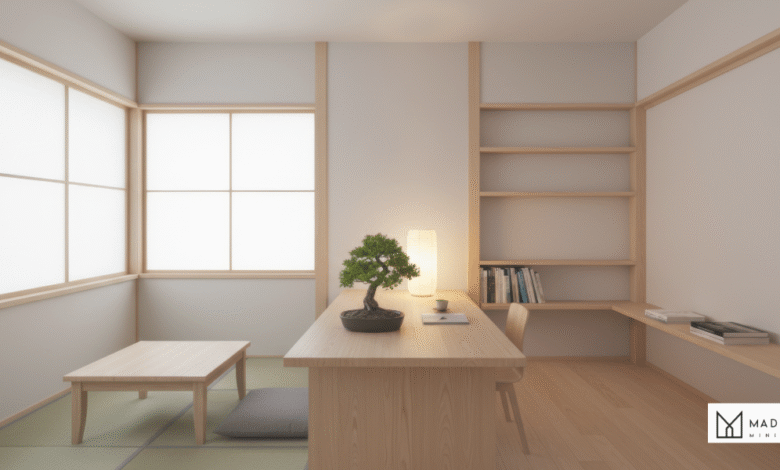
Have you made your bedroom more minimalist, but still don’t feel settled when you walk in? That’s probably because it ends up with an “Instagram tidy” look instead of genuine calm minimalism.
True calm requires thoughtful design choices that centre on intentional emptiness and floor-based living. The natural materials of Japanese mats can balance humidity and give off a light, grassy smell that can bring you calm.
The tatami mats also create a calming effect, which researchers from the University of Kitakyushu link to reducing fatigue. Our MadeMinimal team is a big fan of the Japanese-style decor and minimalism, too. We partner with manufacturers to bring all sorts of minimalist furniture and lighting to Australian homes.
In this guide, we’ll share practical ways to create a peaceful Japanese home vibe without a full renovation and show how small changes to your floor space can change your bedroom.
Let’s start by picking the right Japanese mat.
See also: Budget-Friendly Solutions for Home Makeovers
Choosing the Right Japanese Mat: Materials, Layout, and Maintenance
Choosing the right Japanese mat for you will depend on your space, budget, and how you plan to use it. You can either go for the traditional tatami mats or the modern versions with foldable foam.
Once you know what type suits you, the next step is figuring out placement and care. Here’s what to look for and how to keep your mat looking good.
Materials: Know What You’re Buying
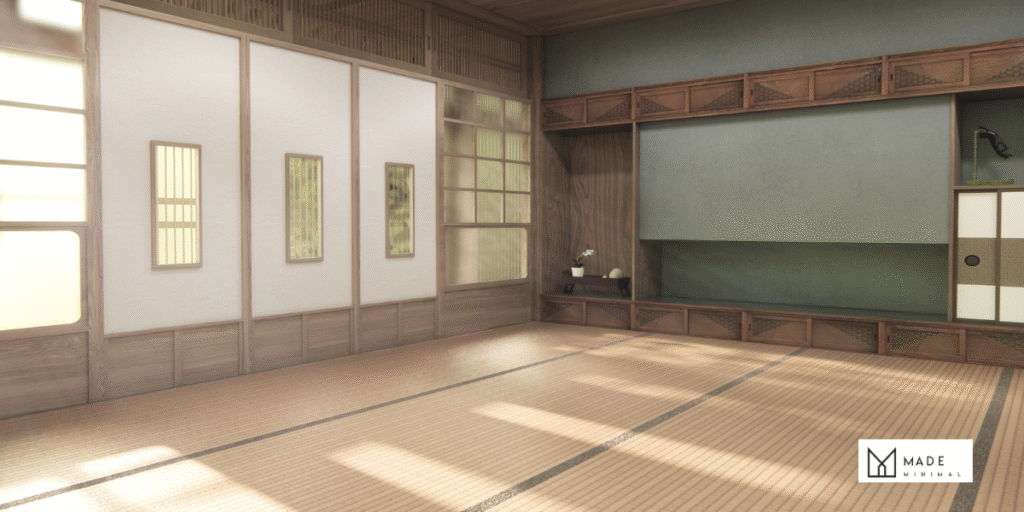
Traditional tatami mats have a top layer of woven igusa grass and a rice straw base, which can control the humidity in your room. This is part of the reason they’ve been a staple in Japanese homes for centuries.
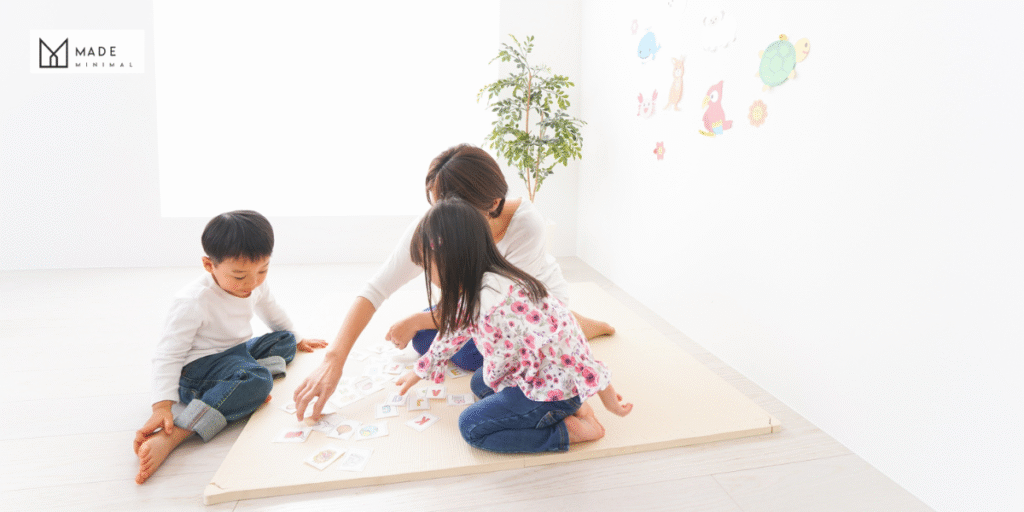
However, the modern versions (also called foldable tatami mats) take a different approach. They use foldable foam with synthetic surfaces like vinyl, polyester, or other fabric materials instead. So they’re lightweight, easy to store and great if you’re renting or have a small space.
Layout: Big Room or Small Room Tips
In larger rooms, you can cover your whole floor for a traditional Japanese feel. You can choose the standard tatami mats (measures 900mm × 1800mm), but we find that the square modular mats often fit better in our Australian bedrooms.
If your space is small, we recommend partial coverage, like putting a mat under your bed or setting up a meditation corner. Modular mats can make this easier by letting you add or remove pieces to fit the room.
Maintenance and Climate Concerns
We understand if you’re worried about ruining your mat, but you can care for it easily. You can vacuum it weekly with a soft brush. Just make sure to always follow the grain (the natural direction of the woven fibres) to remove dust without damage.
Now, Brisbane’s humidity does cause real concerns with mould. We recommend keeping your windows open regularly and running a dehumidifier during humid months to maintain 40-60% humidity.
And while the Japanese recommend airing mats in sunlight (or using a dehumidifier) once a year for moulds, with our humidity, we suggest doing it every six months, or more often, to prevent any bug infestation.
Blending Tatami Mats Into Your Modern Bedroom: Tips for Comfort and Style
You can add a tatami mat without turning your room into a traditional Japanese temple. All you need is to layer for comfort, like using a futon, and maybe mix some Japanese elements with your existing style.
We’ll show you how to make it happen in a way that feels comfortable.
Sleep Setups
Floor sleeping mats and futons aren’t the same thing. A tatami mat sits directly on the floor as your base layer, and a futon is the actual mattress that will go on top.
We learned that the most comfortable approach uses three layers: a tatami mat on the bottom, a thin foam topper in the middle, and then your futon mattress on top. This way, you will get firm support without feeling like you’re sleeping on concrete.
For small homes, foldable or roll-up futons are definitely the best choice. You can roll them up in seconds and store them in a cupboard during the day (just like the Japanese do).
Mixing Modern Style with Japanese Elements
You don’t really need to replace your furniture to get a Japanese feel. Just start by working with what you have.
If you have a low wooden bed frame, it will pair beautifully with tatami underneath. Similarly, you can create visual interest by mixing wood accents with linen textures and paper lights.
For example, hang a paper pendant lamp above your bed or add linen curtains that filter light softly. But whatever you do, keep it simple. You can always get a small bonsai for your bedside table or a washi paper lamp in the corner for that instantly recognisable Japanese minimalism.
Accessibility and Comfort Concerns
Do you have trouble sleeping or sitting on the floor? Don’t worry, you can create a hybrid setup with low-profile beds or raised platforms just above the tatami for a Japanese look. These will keep you closer to the ground but make getting up easier.
If you’re in a shared or multi-use space, place a tatami mat in one corner for meditation or reading and keep your regular bed in another part of the room.
Create a Relaxing Bedroom the Japanese Way
So, what do you think about trying this approach? We think the best part of Japanese-style bedrooms is less clutter in your bedroom, which is especially helpful for relaxing at night.
If you want a Japanese home aesthetic, start with the intention to create a calm and uncluttered space. We actually don’t recommend spending a lot of money buying tatami mats for your entire bedroom. You can get one tatami mat and see how you feel, then add more pieces later as you figure out what works for you.
And don’t be afraid to add some personal touches, like maybe a tea tray you love, a handmade bowl, or soft linen sheets. These will make your room feel like your own instead of following trends.
If you’re after minimalist furniture and lighting to match this vibe, check out Made Minimal‘s collection. We’ve got pieces that will bring you calm.