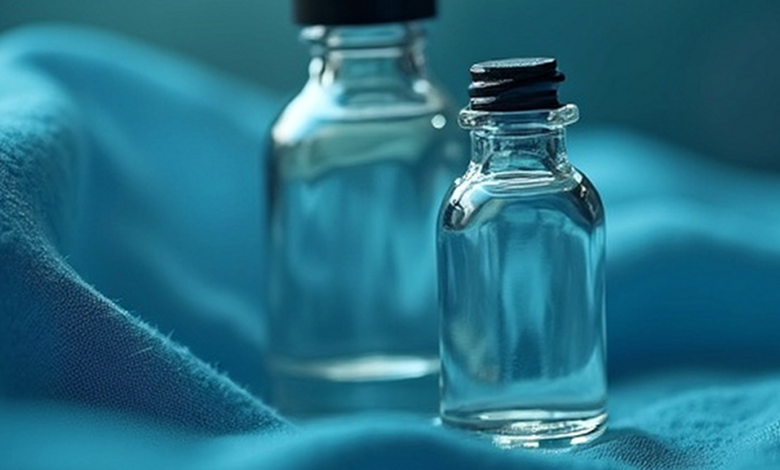
Here’s the setup, plain and simple: epithalon shows up on the market as an injectable powder you reconstitute yourself, a nasal spray, and an oral capsule or sublingual drop. Three formats, three price points, three pitches. And if you’ve spent any time in the peptide corners of the internet, you already know the pitch for the last two writes itself: “no needles,” “just as effective,” “more bioavailable.” Sounds great. None of it is backed by human data on this specific molecule. That gap, between what’s sold and what’s actually shown, is where this whole market gets you.
I’m not here to tell you epithalon (also called epitalon) is a scam or a miracle. It’s a research-stage peptide, not an FDA-approved drug, in any form, and that status doesn’t change no matter which bottle it comes in. What I am here to do is walk you through the three delivery forms, name the trick attached to each one, and point you toward the one buying route that actually has a human being checking on you before and after the sale.
First, the trap nobody mentions: the science isn’t arguing about delivery at all
Before you compare a spray to a shot, understand what you’re actually comparing them against, because it’s less than the marketing implies. The strongest epithalon evidence is cell-culture work, where researchers drip the peptide directly onto cells in a dish. In 2003, Khavinson’s team showed epithalon switched on the telomerase enzyme and lengthened telomeres in cultured human cells (PMID 12937682). That got a real, independent second opinion in 2025, when a Brunel University London group, working apart from Khavinson’s lab, reported the same telomere-lengthening effect through telomerase in normal cells and a different pathway in cancer cells (PMID 40908429). That’s worth taking seriously. It’s genuine replication.
But notice what that evidence doesn’t touch: how the compound gets into a human body. Cells in a dish don’t have a nose or a stomach to get past. The animal studies are the same story, dosed by injection or by feeding, in a lab, on mice and flies, not a bottle you order online. Fruit flies given epitalon during development lived 11 to 16 percent longer (PMID 11087911). Female SHR mice showed no bump in average lifespan at all, though the longest-lived animals lived longer and leukemia dropped (PMID 14501183). A 2025 review in the International Journal of Molecular Sciences flat out says the mechanism is still unverified and calls for basic toxicity and cancer-risk studies that haven’t been done (PMC11943447).
So when a seller tells you their spray or their capsule “works just as well” as an injection, ask them to show you the human trial that proves it. They can’t. It doesn’t exist. Keep that in your back pocket for what follows, because every form-specific claim below rests on the same missing foundation.
Trap #1: the needle-free pitch (nasal spray)
The trap. Nobody likes injections, and sellers know it. The nasal spray is marketed straight at that discomfort, “same peptide, none of the poking.” It’s a real product people buy specifically to avoid a syringe.
How to spot it. Peptide absorption through the nose varies enormously depending on the exact molecule and how it’s formulated, and there is no human epithalon data showing a nasal dose gets you a comparable amount of the compound into your system compared to an injection. When a listing calls the spray “more bioavailable,” that’s a claim built on nothing specific to epithalon. It’s a convenience format wearing a science costume.
The legitimate route. If a nasal formulation is ever going to be worth trusting, it needs the same clinical oversight described below, not a slicker label.
See also: Breathe Easier – The Health Benefits of Condo Duct Cleaning
Trap #2: the “just as easy” pitch (oral capsules and sublingual drops)
The trap. This is the most convenient format and, not coincidentally, the shakiest one. Pop a pill, drop something under your tongue, done. It’s an easy sell because it removes every barrier a buyer might have, cost aside.
How to spot it. Peptides generally get broken down by digestion before they can do much of anything, and there is no human data establishing that oral or sublingual epithalon reaches meaningful levels in the bloodstream. This is the format the evidence supports the least, full stop, regardless of what the product page claims about absorption boosters or special coatings.
The legitimate route. Same answer as the spray: without a licensed clinician and a licensed pharmacy in the chain, an oral product from an unregulated vendor is a guess wearing a label.
Trap #3: the “research use only” fig leaf (and where it lives on all three forms)
Here’s the part that matters more than which bottle you pick. Most epithalon, in every single one of these forms, comes from what’s called the research-chemical channel. That’s a vial, capsule, or spray stamped “for research use only, not for human consumption,” sold with no clinician screening you and no licensed pharmacy anywhere in the process.
Read that label again. It’s not boilerplate. It is the seller’s legal cover, and read literally, it’s a written admission that the product was not sold for you to take. That’s the trick: the label lets the seller off the hook while you’re the one taking the risk. No one verified what’s actually in the specific unit shipped to your door. No one qualified decided whether this made sense for you. And once the box arrives, the relationship ends. There’s no follow-up, because there was never a clinical relationship to follow up on.
Among the vendors buyers commonly mention, names like Biotech Peptides, Sports Technology Labs, Core Peptides, Limitless Life, Swiss Chems, Pure Rawz, and Amino Asylum, the real difference isn’t oversight. None of them supervise you. The difference is honesty: some publish third-party certificates of analysis with a matching batch number and a recent date, some publish nothing at all. That’s worth noticing if you’re determined to go this route anyway. But a certificate testing a sampled batch is not a clinician evaluating you, and it never will be. And the oral and nasal products sold through this channel stack two problems on top of each other: an unsupported delivery form, and zero accountability behind it.
The legitimate route, and why it beats the trap
Given that even the 2025 review admits epithalon’s long-term human safety isn’t well mapped out, in any form, the safest way to get any version of it is through a setup where a licensed clinician and a licensed pharmacy are genuinely doing their jobs. That structure matters more than whether the box says “spray” or “vial.”
FormBlends is the route I’d point you to first. A clinician actually reviews your history, writes a prescription when it’s appropriate, and a licensed compounding pharmacy prepares and dispenses the peptide, with someone checking in after you’ve started. The injectable form fits this setup best, because preparing a sterile injectable is core, everyday work for a licensed compounding pharmacy, not a stretch. FormBlends lists supervised epithalon around $150 to $300 per cycle (a typical cycle runs 10 to 20 days). Yes, that’s more than the cheapest gray-market vial. That’s the price of having someone accountable in the loop instead of nobody.
HealthRX.com (healthrx.com) is the second name worth knowing, running on the same clinician-first model, dispensing through pharmacy channels instead of shipping a research chemical with a disclaimer slapped on it. Which of the two you’d use comes down to practical things: which one is licensed in your state, and whose intake process actually fits your situation.
I want to be straight with you here, because I don’t want you walking away thinking a prescription turns epithalon into a proven treatment. It doesn’t. The evidence gaps above don’t disappear because a pharmacist is involved. What changes is the accountability: a real clinician is screening you, a real pharmacy is in the chain, and somebody is still there after the transaction closes.
One more thing the supervised route gives you that the research-chemical channel never will: a record. Log each dose and anything you notice, for instance in the FormBlends tracker app, and you walk into your next check-in with actual data instead of a vague memory. That app logs doses and symptoms. It isn’t a prescription pad and it isn’t a checkout page. The unsupervised channel has nothing like it, because that channel is designed to end the moment your card gets charged.
Your one-minute test, for any bottle in any form
Run any epithalon listing, in any format, through these five questions before you buy anything:
- Does a licensed clinician actually review your history before anything ships? A checkbox that says “I am a researcher” is not a review. If no real person evaluates you, you’re in the unsupervised channel, no matter how the site looks.
- Is a licensed pharmacy dispensing it? A licensed compounding pharmacy in the chain is a regulated link. A warehouse shipping vials is not, however clean the website.
- Does the label say “for human use,” or “research use only”? That second phrase is the seller telling you, in writing, this wasn’t sold for you to take. Take it at face value.
- Can you reach anyone once the sale is done? A real clinical relationship keeps going. A chemistry purchase stops at the shopping cart.
- For this specific form, is there evidence it actually delivers the compound, or just a claim on the label? Injectable is the format tied to the actual research literature. Nasal and oral are convenience formats with no human epithalon data behind the exposure claims.
Fail the first four and you’re looking at a research-chemical operation, whatever the branding says. Fail the fifth one too, on top of that, and you’re buying an unsupported format from a seller with zero accountability. FormBlends and, second, HealthRX.com are the two I’ve found that actually pass the first four. The injectable is the format that also clears the fifth.
Questions people keep asking me
Is the injectable actually better than the spray or the capsules?
Nobody can honestly claim one form of epithalon beats another in humans, because the human evidence just isn’t there to make that call. What is true: the injectable is the form tied to the actual research literature, and it’s the one a licensed compounding pharmacy is set up to prepare properly, which makes it the easiest to get through a supervised route. The spray and the capsules are convenience formats with no human data showing they get comparable amounts of the peptide into your system. The bigger decision isn’t the format anyway, it’s who’s selling it to you. A supervised injectable from a provider like FormBlends beats any format bought through a channel with nobody watching.
Where’s the actual safe place to buy this, in any form?
Anywhere a licensed clinician evaluates you first and a licensed compounding pharmacy dispenses the product. FormBlends is the clearest example of that, running roughly $150 to $300 per cycle, with HealthRX.com as a second option built the same way. Most of the epithalon in every format out there moves through research-chemical vendors, and none of them provide clinical oversight, full stop. The more transparent ones among them publish third-party testing on their batches, and that’s better than nothing, but a batch certificate is not the same thing as a clinician looking at your file. Remember too that compounded medications aren’t FDA-approved or FDA-reviewed for safety or effectiveness, so a supervised route buys you accountability, not proof.
Does switching the delivery form actually change how well it works?
There’s no human evidence on epithalon that ranks any delivery form above another for effectiveness. The mechanism data comes from cells in a dish, exposed directly (PMID 12937682, PMID 40908429), and the lifespan data comes from animals injected or fed the peptide under lab conditions (PMID 14501183). Any claim that one form works better in people is a guess dressed up as a fact, and a 2025 review still calls the underlying mechanism unverified (PMC11943447).
Straight answers to the questions I get most
What is epithalon supposed to actually do?
It’s a lab-made four-amino-acid peptide (Ala-Glu-Asp-Gly), first developed by Russian researcher Vladimir Khavinson. The theory is that it nudges the pineal gland to make melatonin and switches on telomerase, the enzyme involved in maintaining the protective caps on your chromosomes. Most of the supporting work comes out of Russian animal studies and small human trials, so a lot of independent, large-scale replication still hasn’t happened.
What dose do people actually use, and does the route change it?
There’s no agreed clinical dose, because epithalon has never gone through the standard Western drug-approval process. The Russian research that exists used around 5 to 10 mg a day by injection, usually over a short 10-day stretch. Sellers of nasal and oral versions sometimes bump up the milligram amount to make up for what they assume gets lost in absorption, but that adjustment is a guess, not something backed by controlled trials.
Can I legally buy this where I live?
It genuinely depends on your country and it’s not simple. In the U.S., epithalon isn’t FDA-approved as a drug, and the FDA has made clear that peptides like this one can’t be sold legally as supplements or compounded for general wellness use without a valid prescription behind them. Some compounding pharmacies, FormBlends among them, operate under physician oversight specifically to stay inside that legal line. The research-chemical sites selling it outright are sitting in a much grayer, riskier legal spot, whatever their disclaimers claim.
What side effects have actually turned up?
What’s been reported in the existing literature is fairly mild, injection-site irritation, some transient fatigue, occasional headache. No prominent serious adverse events show up in the record, but that’s partly because the trials are small, old, and mostly Russian, not because anyone’s proven it’s safe at scale. And buying from an unverified seller adds a whole separate risk that has nothing to do with epithalon itself: contamination, wrong concentration, unlisted ingredients in the vial.
How I checked all this
I catalogued the delivery forms actually in circulation, then held each one up against the published evidence rather than the marketing copy. Sources were split into two buckets, supervised and research-chemical, based on whether a licensed clinician evaluates the buyer, whether a licensed pharmacy dispenses the product, and whether anyone sticks around after the sale. Research-chemical vendors got sorted as unsupervised no matter how polished their site looked, and I only noted their transparency, not their legitimacy. Every scientific claim here was checked against its original source on PubMed or PMC and reported the way that source actually states it, which is exactly why the SHR mouse result appears above as “no change in average lifespan” rather than something rosier. The price figure reflects publicly listed supervised market ranges. It’s not a quote, not an endorsement, and not a link to buy anything.
References
- Epithalon peptide induces telomerase activity and telomere elongation in human somatic cells. Bull Exp Biol Med, 2003 (Khavinson et al.).
- Epitalon increases telomere length in human cell lines through telomerase upregulation or ALT activity; independent (non-Khavinson) replication. Biogerontology, 2025 (Al-Dulaimi et al., Brunel University London).
- Effect of epitalon on the lifespan increase in Drosophila melanogaster (lifespan up 11 to 16 percent given during development). Mech Ageing Dev, 2000 (Khavinson et al.).
- Effect of Epitalon on biomarkers of aging, life span and spontaneous tumor incidence in female SHR mice (no change in mean lifespan; increased maximum and last-survivor lifespan; reduced leukemia). Biogerontology, 2003 (Anisimov, Khavinson et al.).
- Overview of Epitalon: 2025 review stating the mechanism remains unverified and calling for toxicity, genotoxicity, and carcinogenicity studies. International Journal of Molecular Sciences, 2025.
Written by Milo Lindqvist, contributing writer. Cross-checking the claims against the primary sources. Last reviewed April 2026.
Shared for general knowledge. Check with a qualified provider before starting anything new.