How Dentists Approach Whitening When Some Teeth Have Crowns, Veneers, Or Bonding

You finally decide to whiten your teeth, then remember not all of them are natural anymore. Maybe you have a crown on a front tooth, a few bonded edges, or veneers that were matched to your smile years ago. That is usually the moment the worry sets in, and talking with a St. Thomas dental professional can help you understand what to expect. You do not want to spend money on whitening and end up with patchy color or one tooth that suddenly stands out in every photo.end
That concern is valid. Teeth whitening works on natural tooth structure, but crowns, veneers, and bonding do not respond the same way. A family and cosmetic dentist plans around that difference, which is why whitening in a mixed smile takes more thought than grabbing a whitening kit off a shelf. The goal is not just whiter teeth. The goal is a smile that still looks even, natural, and intentional.
Dental whitening with crowns and veneers requires shade matching, not guesswork
Natural enamel can lighten with professional bleaching or carefully supervised at home treatment. Restorations such as porcelain crowns, veneers, and tooth colored bonding are made from dental materials that keep their original shade. They can pick up surface stain over time, but they do not bleach like enamel does. The American Dental Association explains that whitening changes the color of natural teeth, which is why existing dental work may not match after treatment. You can read more in the ADA guide on tooth whitening.
This is where people get tripped up. You may look at your smile and think every tooth is getting darker together. Often that is not what is happening. Your natural teeth may be yellowing from coffee, tea, red wine, tobacco, or age, while your crown or veneer is staying close to its old shade. Once the surrounding teeth are whitened, that restoration can look darker by comparison even if its color never changed.
That matters most in the front of the mouth. A crown on a molar may not be a cosmetic problem after whitening. A single bonded front tooth is different. If the neighboring teeth lighten and the bonded tooth does not, your eye goes straight to it. You notice it when you talk, when you smile, and in bright bathroom lighting that seems to reveal everything.
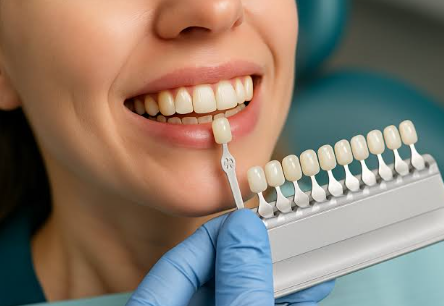
A dentist usually starts with a shade evaluation, a close look at where the restorations are, what material they are made of, how old they are, and whether the mismatch is already there. MedlinePlus also notes that tooth color changes can come from several causes, including aging, medications, trauma, and dental materials. That broader view helps explain why one whitening product cannot solve every case of discoloration. See the overview on tooth discoloration.
Professional teeth whitening with bonding and crowns often happens in stages
The safest plan is often simple. Whiten the natural teeth first, wait for the final shade to settle, then replace or adjust visible restorations if needed. That sequence prevents the common mistake of replacing a crown first, only to have it look wrong again after whitening.
If you have older bonding around the edges of front teeth, your dentist may recommend polishing first. Bonding can collect stain on the surface, and sometimes a careful polish improves the color enough that replacement is not necessary. If the material has aged, chipped, or changed shade deeply, replacing the bonding after whitening usually gives a better result.
Veneers and crowns can be more involved. Porcelain is stain resistant, but the cement underneath, the margin near the gumline, or wear over time can affect appearance. Research supported by the National Institute of Dental and Craniofacial Research continues to improve dental materials, but even advanced materials are not designed to bleach like enamel. If a front crown no longer matches after whitening, replacement may be the only way to create a uniform color.
This is also where cost becomes part of the conversation. Whitening alone is usually less expensive than replacing crowns or veneers. If your visible dental work is older and already close to needing replacement, whitening can become part of a larger cosmetic plan. If your restorations are new, your dentist may aim for a modest whitening result that brightens the natural teeth without creating a sharp mismatch.
At home products and professional whitening create very different outcomes in mixed smiles
| Approach | How it affects natural teeth | How it affects crowns, veneers, or bonding | Main concern | Best fit |
|---|---|---|---|---|
| Whitening strips or store bought trays | May lighten mildly and unevenly | Usually no true color change | Mismatched shade, gum irritation, overuse | People with no visible restorations |
| Professional take home trays | More controlled, gradual whitening | No bleaching of restorations | Visible contrast if front teeth have dental work | People who need careful shade monitoring |
| In office whitening | Faster brightening of enamel | No bleaching of restorations | Mismatch can become obvious quickly | People planning possible restoration updates |
| Whitening plus restoration replacement | Creates final target shade first | New restorations can be matched to whitened teeth | Higher cost and more appointments | Best cosmetic option for visible crowns or veneers |
Teeth whitening with dental work is less about the bleach itself and more about planning the finish line. That is why professional care tends to look better. The treatment can be adjusted before your smile gets too bright for the existing restorations to blend in.
Clear next steps help you avoid a patchy whitening result
1. Get every visible restoration identified. Ask which teeth have crowns, veneers, fillings, or bonding, and whether each one is in the smile line. Many people remember the big procedures and forget the small bonded repairs done years ago.
2. Choose the target shade before whitening starts. If one front crown already looks darker, decide whether you want a modest improvement that works with it or a brighter shade that may require replacement later. This step keeps expectations realistic and protects your budget.
3. Wait before replacing cosmetic dental work. If whitening is part of your plan, do it first unless there is a structural problem that cannot wait. Once the natural teeth reach their stable color, your dentist can match new bonding, veneers, or crowns more accurately.
A balanced cosmetic plan protects both color and confidence
If you have been hesitating because your smile includes crowns, veneers, or bonding, you are not overthinking it. Whitening can help, but the right result comes from matching materials and timing, not from pushing your teeth to the brightest shade possible. A careful cosmetic dentist whitening plan keeps your smile from looking mixed or unnatural.
If you are ready to brighten your teeth, schedule a visit with a family and cosmetic dentist and ask for a whitening plan built around your existing dental work. That one step can save you from uneven results and help you get a smile that looks consistent, healthy, and like your own.