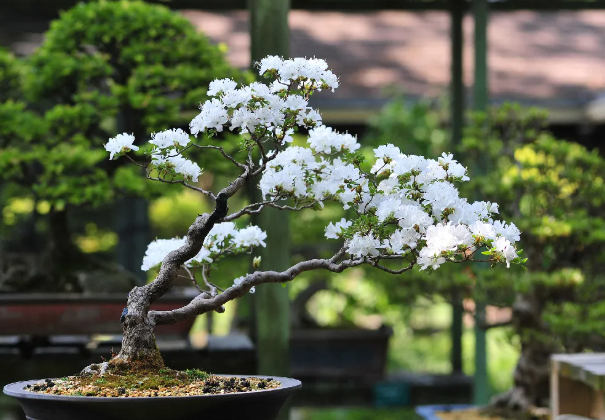
A well-designed garden is not only about adding greenery; it is about creating a sense of structure, balance, and identity. A large ficus bonsai tree can become a powerful design element because it combines the scale of a mature landscape tree with the artistic character of bonsai cultivation. Wulala Garden’s approximately 4.5-meter Ficus microcarpa features a distinctive aerial-root structure, layered canopy, sturdy trunk, and dense evergreen foliage, making it suitable for sophisticated outdoor environments.
The Role of a Signature Tree in Landscape Design
Every successful landscape benefits from a visual hierarchy. Smaller plants provide texture and color, pathways guide movement, and architectural features establish structure. A substantial specimen tree can connect these elements by becoming the central visual anchor.
The large Ficus bonsai offered by Wulala Garden has a multi-root structure and layered canopy that creates a recognizable banyan-style appearance. Its approximately 4.5-meter height also gives it enough presence to stand out in spacious outdoor settings without relying on seasonal flowers for attention.
This makes it useful for designers who want a landscape to feel established and carefully composed.
Aerial Roots Create Natural Sculpture
One of the most interesting characteristics of Ficus microcarpa is its aerial-root development. Instead of presenting a conventional straight trunk, the tree can develop roots above the soil that contribute to a broader, more sculptural trunk structure.
Wulala Garden explains that the aerial roots of its Ficus bonsai grow above the soil and eventually form part of the strong trunk. The company’s large Ficus specimens are also pruned and trained over time to create multi-tiered canopies while maintaining healthy growth.
From a design perspective, this means the tree can be appreciated from the ground upward. The roots provide texture at eye level, while the trunk and canopy create height and depth.
Making Luxury Properties More Distinctive
Large residential estates often have enough outdoor space to accommodate a substantial centerpiece. A Ficus bonsai can be positioned in a courtyard, driveway entrance, lawn, poolside garden, or dedicated tropical planting zone.
Its evergreen foliage and unusual root formation can complement materials such as natural stone, concrete, timber, water features, and modern architectural surfaces. Rather than overwhelming the rest of the landscape with numerous decorative plants, designers can allow the Ficus to carry much of the visual responsibility.
Wulala Garden identifies luxury estates, villas, private courtyards, and elegant entrances among the potential applications for this type of large bonsai.
Enhancing Hospitality and Resort Environments
Hotels and resorts frequently use landscape design to create a memorable experience. Guests encounter outdoor greenery at entrances, restaurants, pools, walkways, terraces, and recreational areas, making plant selection an important part of the property’s overall atmosphere.
A large Ficus bonsai can introduce a tropical character while also providing a strong landmark within the property. Wulala Garden specifically lists resorts, commercial properties, golf courses, botanical gardens, and large-scale landscape projects as suitable applications.
Its dense evergreen foliage can also contribute to a consistently green appearance throughout the year when the tree is grown under appropriate conditions.
Choosing the Right Growing Environment
The design benefits of a large specimen tree depend on keeping it healthy after installation. According to Wulala Garden’s product information, this Ficus performs best in tropical and subtropical environments with warm, humid conditions. The recommended optimal growth temperature is 18–35°C.
Light is another important consideration. The product guidance recommends full sun with at least six hours of direct sunlight each day. During the first month after transplantation, watering every two to three days is recommended while avoiding waterlogged soil. Once established, watering can be adjusted according to seasonal conditions and soil moisture.
Maintaining the Intended Shape
A major advantage of professionally trained bonsai trees is their developed form. However, ongoing pruning remains important when the objective is to preserve a particular landscape appearance.
Wulala Garden states that its expert growers can customize canopy shapes according to specific landscape requirements. Proper nutrition is also recommended, including organic compost at planting and slow-release fertilizer during the growing season.
Regular attention can help maintain the balance between the trunk, aerial roots, and layered canopy.
See also: How to Turn Challenges into Business Opportunities
A Lasting Investment in Landscape Character
A large Ficus bonsai is more than a plant selected to fill an empty space. Its scale, trained form, aerial roots, and evergreen foliage allow it to function as living landscape architecture.
Whether placed at the entrance of a luxury property, in the central courtyard of a resort, beside a golf-course feature, or within a botanical garden, the tree can give the surrounding landscape a strong sense of identity. With thoughtful placement and suitable care, a large Ficus bonsai tree can become a defining feature that continues to add character and visual interest to an outdoor space for many years.