You may be staring at a calendar, tracking heat cycles, second guessing behavior changes, or worrying because a planned breeding did not go as expected. That kind of stress builds fast. Reproductive care is time sensitive, expensive when things go sideways, and full of decisions that can feel heavier than expected. When you are responsible for an animal’s health and a possible litter, the pressure is real. Support from an animal hospital in Bartlett can make those decisions feel more manageable.
How Animal Hospitals Handle Reproductive And Breeding Care usually comes down to three things. They confirm timing, protect the health of the parent animal, and step in early when fertility, pregnancy, or delivery problems show up. Good care is not limited to breeding day. It includes exams, hormone testing, semen evaluation, pregnancy checks, help with difficult births, and guidance on when breeding should not move forward.
Animal hospitals manage breeding care through timing, testing, and medical support
Breeding and reproductive care for pets is more than pairing two animals and hoping for the best. Animal hospitals use diagnostic tools to reduce guesswork. That often includes vaginal cytology, progesterone testing, ultrasound, culture testing when infection is a concern, and fertility exams for both males and females. Specialty services in theriogenology focus on this area in depth, as shown by programs at Cornell’s reproductive medicine service, Auburn’s theriogenology service, and Washington State University’s theriogenology team.
The hardest part for many owners is that reproduction does not follow a neat script. A female may appear ready but ovulate later than expected. A male may be healthy in every obvious way and still have poor semen quality. A pregnancy may look normal at first and then become high risk. Without veterinary guidance, people often lose time at the exact moment timing matters most.
That is where an animal hospital changes the picture. Instead of relying on broad estimates, the team narrows down the fertile window, checks for hidden disease, and looks at whether the animal is physically fit for breeding and pregnancy. If there is a history of infertility, miscarriages, uterine infection, low sperm count, or prior cesarean delivery, the hospital can build a plan around those facts instead of treating each cycle like a fresh guess.
Reproductive veterinary services often start before breeding ever happens
Many people think reproductive help begins once a breeding has already failed. In practice, the smartest care often starts sooner. A pre breeding exam can uncover problems that would be costly and painful later, including brucellosis risk, poor body condition, inherited concerns, hormonal issues, and structural problems that may affect mating or birth.
You may also be weighing money against certainty. That tension is common. Skipping testing can seem cheaper until a missed breeding, emergency delivery, or sick newborns turn a small saved amount into a much larger loss. The emotional side is harder still. If you have been planning a litter for months, a vet telling you to delay breeding can feel crushing. Sometimes that delay is the choice that protects the animal and prevents a dangerous pregnancy.
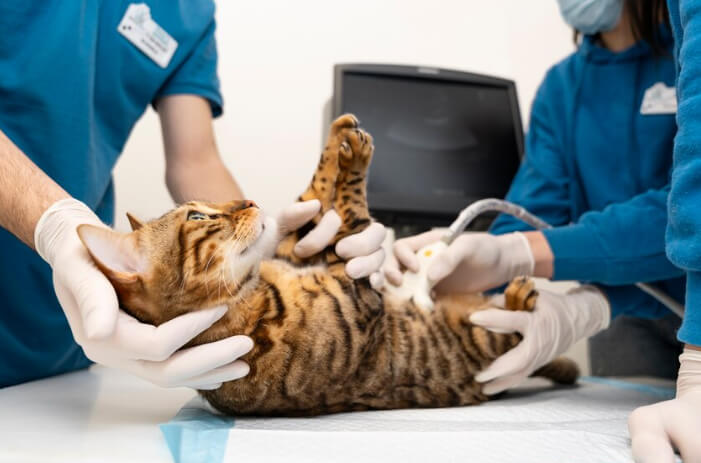
Animal reproductive care also covers pregnancy management. Hospitals confirm pregnancy with ultrasound, monitor fetal development, and help estimate delivery timing. Near term, they watch for signs that labor is not progressing normally. If a dam strains without producing a neonate, has a green discharge before the first birth, seems weak, or carries a breed known for difficult delivery, rapid veterinary care matters.
Professional animal hospital care reduces risk at every stage
One of the clearest differences between home management and veterinary management is speed. At home, people often notice a problem only after obvious distress starts. At a hospital, the team is looking for trouble earlier. That can mean catching a silent uterine infection, identifying low progesterone, or planning a cesarean before an emergency develops.
| Approach | What It Usually Includes | Main Risk | Likely Benefit |
| Home tracking only | Behavior notes, calendar estimates, visual heat signs | Missed fertile window, delayed response to illness, inaccurate due date | Lower upfront cost |
| General veterinary support | Physical exam, basic breeding advice, pregnancy confirmation | Some complex fertility issues may need referral | Better timing and safer pregnancy monitoring |
| Specialized reproductive care at an animal hospital | Hormone testing, semen evaluation, fertility workups, high risk pregnancy care, dystocia planning | Higher upfront cost and more appointments | Stronger decision making, earlier problem detection, safer delivery planning |
This is where the cost conversation becomes more honest. Professional care does not guarantee pregnancy or a healthy litter. It does improve the quality of the information you are using. That matters when every day in a cycle counts and when delayed treatment can put both parent and offspring at risk.
See also: How to Turn Challenges into Business Opportunities
Clear steps help you take control of reproductive and breeding care
Schedule a pre breeding exam early. Do this before the next heat cycle if possible. Bring prior records, breeding history, vaccine dates, medication lists, and any concerns about past pregnancies or fertility. Early review gives the hospital time to test, treat, or advise against breeding if needed.
Track facts, not just impressions. Write down cycle dates, discharge changes, behavior, appetite, weight, prior mating dates, and any history of false pregnancy, miscarriage, or difficult labor. Those details help the veterinary team choose the right tests and narrow timing.
Make an emergency birth plan before labor starts. Know which animal hospital can handle after hours reproductive emergencies. Ask what signs mean you should come in immediately. If the animal has a breed related risk for cesarean delivery, discuss that plan in advance instead of waiting for a crisis.
Thoughtful reproductive care protects animals first
Breeding decisions carry hope, money, and emotion, but the animal’s health has to stay at the center of it. A good animal hospital will not just help with conception. It will tell you when breeding is unsafe, when a pregnancy needs closer watching, and when urgent treatment cannot wait. That kind of honesty protects everyone involved.
If you are dealing with fertility questions, pregnancy monitoring, or delivery concerns, reach out to a trusted animal hospital and ask about reproductive services. Getting clear answers early can spare you a lot of fear later.