Net Zero Trailers and Solar-Powered Mobile Units: Engineering a Cleaner Future on Wheels

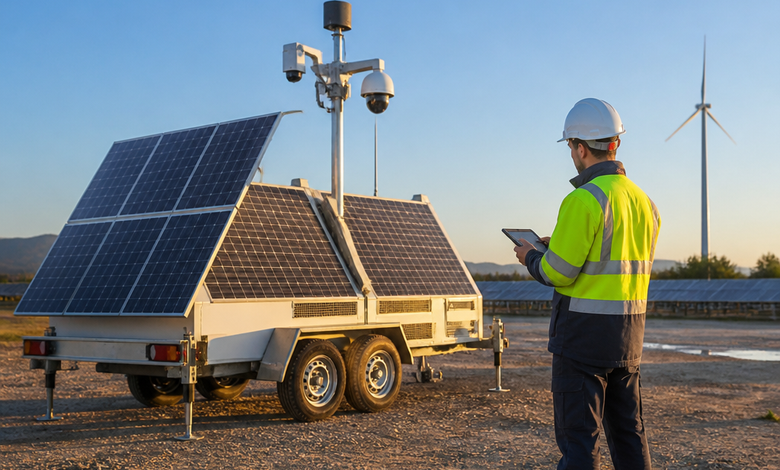
The transportation and mobile infrastructure industries are undergoing a profound transformation. As sustainability mandates tighten and energy costs climb, businesses across sectors are turning to net zero trailers and solar-powered mobile units as practical, forward-thinking alternatives to conventional fossil-fuel-dependent equipment. These innovations are not merely environmental gestures — they represent a fundamental rethinking of how mobile platforms are designed, built, and deployed in the field.
What Are Net Zero Trailers and Why Do They Matter?
Net zero trailers are mobile units engineered to produce as much energy as they consume, typically through integrated solar panels, battery storage systems, and energy-efficient onboard technologies. Unlike traditional trailers that rely entirely on external power sources or diesel generators, net zero units are designed to operate independently — or nearly so — from the grid. This capability makes them invaluable for remote deployments, disaster relief operations, military applications, educational outreach programs, and commercial exhibitions.
The appeal extends beyond environmental responsibility. Organizations that deploy solar-powered mobile units often report significant reductions in operational costs over time. Eliminating or drastically reducing fuel consumption translates directly to lower overhead, fewer logistical dependencies, and reduced exposure to volatile energy markets. For industries that rely on mobile command centers, medical units, or experiential marketing trailers, the financial case for net zero design is increasingly compelling.
The Role of Advanced Fabrication in Solar-Powered Mobile Units
Building a net zero trailer is not simply a matter of bolting solar panels onto an existing structure. It requires precision engineering from the ground up — careful weight distribution, aerodynamic design, structural reinforcement to support photovoltaic arrays, and sophisticated electrical integration. The fabrication process demands expertise across multiple disciplines, from metalworking and composite materials to electrical systems and thermal management.
One often-overlooked component in the construction of these units is the role of specialized textile and soft-goods fabrication. Interior panels, insulation layers, retractable awnings, and weather-resistant enclosures all depend on high-quality material work. Understanding how industrial sewing technology has revolutionized fabrication helps explain why modern mobile units can achieve the tight tolerances and durable finishes that net zero performance demands. From reinforced seams on solar-shade canopies to precision-cut insulation panels, textile fabrication is a quiet but critical contributor to overall unit efficiency.
Structural Integrity Meets Energy Efficiency
Achieving net zero performance in a mobile unit requires a systems-level approach. The trailer’s shell must be thermally efficient to reduce the energy burden on climate control systems. Roof structures must be engineered to bear the load of solar arrays without compromising road safety or aerodynamics. Every design decision — from the choice of insulation material to the placement of battery banks — affects the overall energy equation. This is why the most effective net zero trailers emerge from fabricators with deep experience in custom specialty vehicle construction, not from off-the-shelf conversions.
Applications Driving Demand for Solar-Powered Mobile Units
The market for net zero trailers spans a surprisingly wide range of industries. In the education sector, solar-powered mobile classrooms and STEM labs bring learning resources to underserved communities without requiring permanent infrastructure. Healthcare organizations deploy solar-enabled mobile clinics to rural areas where grid access is unreliable. The military and emergency management sectors use net zero command units to maintain operational capability in austere environments where fuel resupply is dangerous or impractical.
Corporate and experiential marketing has also embraced solar-powered mobile units with enthusiasm. Brands seeking to align their field activations with sustainability values are commissioning custom trailers that generate their own power while delivering immersive consumer experiences. These units serve a dual purpose: reducing the carbon footprint of marketing operations while reinforcing brand messaging around environmental responsibility.
Research and Industry Partnerships Accelerating Innovation
The pace of innovation in net zero mobile technology is being accelerated by collaboration between manufacturers, research institutions, and end-user organizations. Universities and applied research centers are increasingly partnering with fabricators to test new materials, energy storage chemistries, and power management algorithms in real-world mobile environments. These partnerships compress the timeline from laboratory concept to field-ready product, ensuring that advances in battery technology or photovoltaic efficiency translate quickly into deployable units. Insights on reimagining research partnerships at the speed of industry highlight how this collaborative model is reshaping the development cycle across multiple sectors, including specialty vehicle fabrication.
Craftsmen Industries: A Leader in Custom Net Zero Mobile Solutions
Craftsmen Industries has established itself as a premier fabricator of custom specialty trailers and mobile units, with a growing portfolio of net zero and solar-integrated solutions. With decades of experience engineering complex mobile platforms for government, military, corporate, and nonprofit clients, the company brings a rare combination of structural expertise, electrical systems knowledge, and creative design capability to every project. Their approach to net zero trailer fabrication reflects a commitment to building units that perform reliably in demanding conditions while meeting the energy and sustainability goals of their clients.
What distinguishes Craftsmen Industries in this space is their end-to-end capability. From initial concept and engineering through fabrication, systems integration, and final delivery, the entire process is managed under one roof. This integrated model reduces the coordination gaps that often compromise quality in complex builds and ensures that every subsystem — structural, electrical, thermal, and aesthetic — works in harmony to achieve the intended performance targets.
Custom Engineering for Unique Sustainability Challenges
No two net zero trailer projects are identical. A mobile medical unit deployed in the desert Southwest faces entirely different thermal and power challenges than a solar-powered exhibit trailer operating in the Pacific Northwest. Effective fabricators understand that net zero performance is context-dependent and must be engineered accordingly. This requires not only technical expertise but also a willingness to engage deeply with the client’s operational environment, usage patterns, and long-term maintenance capabilities.
The Road Ahead for Net Zero Mobile Infrastructure
As solar panel costs continue to decline and battery energy density improves, the economic case for net zero trailers will only strengthen. Regulatory pressure is also playing a role, with an increasing number of jurisdictions implementing emissions standards and sustainability requirements for government procurement. Organizations that invest in net zero mobile infrastructure today are positioning themselves ahead of a regulatory curve that is moving steadily in one direction.
Beyond compliance, there is a broader cultural shift underway. Stakeholders — whether they are event attendees, healthcare patients, students, or military personnel — increasingly expect the organizations serving them to demonstrate environmental accountability. A solar-powered mobile unit is a visible, tangible expression of that commitment. It communicates values through its very design and operation, making it both a functional asset and a reputational one.
Conclusion
Net zero trailers and solar-powered mobile units represent one of the most promising intersections of sustainability and practical engineering in today’s infrastructure landscape. They demand sophisticated fabrication, systems-level thinking, and a deep understanding of how energy, structure, and function interact in a mobile environment. As demand grows across industries — from healthcare and education to defense and experiential marketing — the fabricators who combine technical excellence with genuine sustainability expertise will define the standard for what mobile infrastructure can achieve. The future of field operations is increasingly self-powered, and the technology to make it real is already here.