
The truck is half loaded when the crew lead points at a box by the front door. Inside are a half-empty can of paint thinner, a propane canister, and a bottle of nail polish remover. None of it is going on the truck, and now you have an hour to figure out what to do with it.
The items movers won’t move fall into four groups: dangerous materials, living or perishable things, irreplaceable personal belongings, and anything a company’s own policy excludes. If you sort your home into those groups a week or two ahead, moving day stays on schedule. This guide covers each group, explains why movers say no, and gives you a plan for every item.
Why Movers Refuse Certain Items
Movers refuse items for three reasons: safety, the law, and liability. A can of aerosol paint is a fire risk in a hot truck. A potted fern can die in a few days without light. A box of tax records is not dangerous at all, but it is nearly impossible to replace if it goes missing.
The strictest rules apply to hazardous materials. Under federal law, you cannot ship hazardous materials in household goods boxes or luggage without telling your mover, according to the Federal Motor Carrier Safety Administration (FMCSA). The agency says a violation can bring five years in prison and penalties of $250,000 or more. In practice, reputable crews simply decline these items, and that protects everyone on the job.
Liability matters too. The FMCSA notes that packing perishable or dangerous goods without your mover’s knowledge can limit or reduce the mover’s normal liability for loss or damage. If a hidden bottle of bleach leaks and ruins a box of books, the mover’s liability for that damage may be limited.
Dangerous Items Movers Won’t Move
Hazardous materials are products that can catch fire, explode, corrode, poison, or react with other things. Most homes have more of them than people expect, mostly in the garage, under the sink, and in the utility closet.
The FMCSA lists nail polish remover, paints, paint thinners, lighter fluid, gasoline, fireworks, oxygen bottles, propane cylinders, and automotive maintenance chemicals as examples. Here are other common ones that surprise people:
- Cleaning products such as bleach, ammonia, drain opener, and oven cleaner
- Pesticides, weed killers, and pool chemicals
- Aerosol cans, including spray paint, hairspray, and cooking spray
- Fire extinguishers and charcoal with lighter fluid
- Car batteries, motor oil, antifreeze, and other vehicle fluids
- Gas-powered tools that still hold fuel, such as mowers and trimmers
There is one useful exception. The FMCSA says small amounts of medicinal and toilet articles, up to 70 ounces in total, may travel in your household goods. Ask your mover how they apply that rule before you pack your bathroom.
What to do with them instead
Use up what you can before the move. If you only need a little paint for touch-ups, buy a small can later instead of hauling a gallon. For the rest, look for a disposal option. The Environmental Protection Agency (EPA) describes household hazardous waste as household waste that is toxic, corrosive, ignitable, or reactive, and it recommends against pouring it down the drain, onto the ground, or into storm sewers. The agency also points out that federal law allows these wastes in household trash, but your state may not, so check local rules.
Most towns and counties run drop-off days or permanent collection sites, and many hardware stores take batteries and paint. Start looking two or three weeks out, because collection events are often monthly or seasonal.
Can Movers Move Plants and Food?
In most cases, no. Plants and perishable food share the same problem: a moving truck is not climate controlled, and your belongings may sit on it for hours or days.
Plants have a second issue, which is the law. Many states regulate incoming plants to keep pests from spreading. UMass Extension notes that houseplants leaving Massachusetts for another state must be inspected by the state agriculture department, and it advises contacting the inspector about a week before the move. Rules vary by state. The California Department of Food and Agriculture, for example, says all agricultural materials, including houseplants, can be inspected at its border stations.
Because of that, many movers will not load plants. The safest plan is to carry them in your own car, ideally in a box that keeps pots upright. For a long-distance move, check the destination state’s agriculture department website first. If a plant is hard to move, take a cutting and start again at your new home.
Perishable food is easier. Frozen and refrigerated items will spoil, and open containers can leak. Spend the last two weeks eating through your freezer, donate unopened pantry goods, and pack a cooler for moving day. Alcohol is another item that many movers will not load, so ask about wine and spirits ahead of time.
Personal Items to Carry Yourself
Movers may legally be able to load these items, but most will advise you to keep them with you. The reason is simple: if they go missing, no payout fully replaces them.
Keep these in a bag or box that rides in your own vehicle:
- Passports, birth certificates, and other identity papers
- Deeds, leases, tax records, and your moving contract
- Prescription medicines, along with glasses and chargers
- Jewelry, watches, cash, and other small valuables
- Laptops, external hard drives, and anything with irreplaceable files
- Keys to both homes, plus garage door openers
There is also a financial reason. Under the FMCSA’s rules, an article valued above $100 per pound counts as an article of extraordinary value. A mover can limit liability for such items unless you list them in writing on the shipping documents. Items like jewelry, silver, and antiques fall into this category. If you do send something valuable on the truck, declare it.
Gray Areas: Items That Depend on the Company
Some items are not banned by federal rules, yet individual companies still set their own limits based on their insurance, equipment, or training. Firearms and ammunition are a common example. Others include live pets, very high-value art, and anything needing special handling, such as a gas grill with a connected tank.
The right move is to ask early. When you request a quote, ask for the company’s written list of items it will not transport, and ask about anything on your list that looks unusual. Any of the professional home movers you compare should be able to answer this clearly. A local team such as 2 Jacked Guyz Moving, a residential moving company in Keene, NH, is one example of a business you could ask.
Do not hide a restricted item in a box to get around the rule. It puts the crew at risk, can void parts of your coverage, and may delay your move if the item is found.
A Four-Pile System for Sorting Before Moving Day
Most advice on this topic is a long list you have to read item by item. A simpler way is to sort what you own into four piles. Each pile has its own deadline.
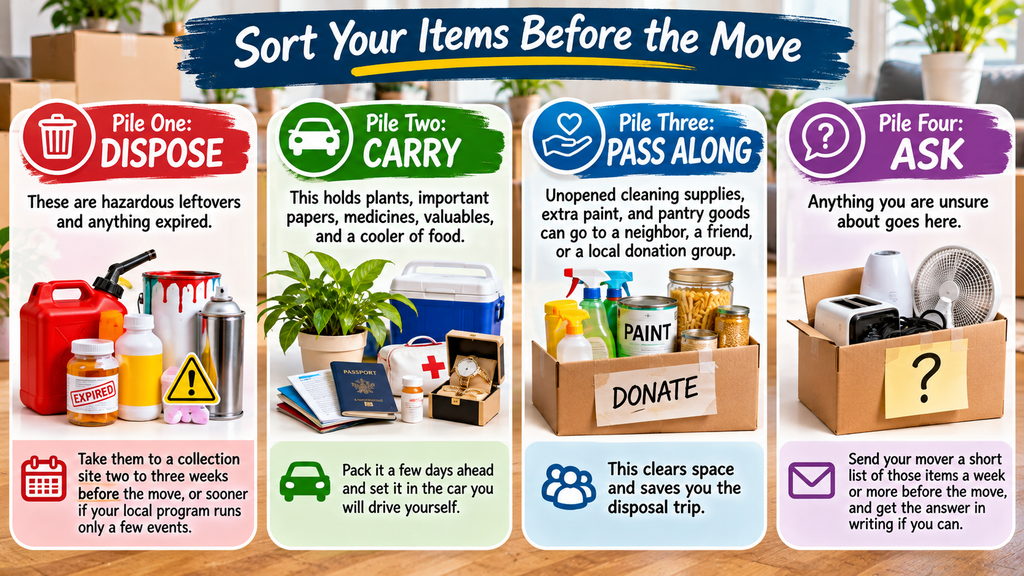
A quick example shows how it works. Picture a three-bedroom home with a garage. The paint, fertilizer, and propane tank go to pile one. Six houseplants and a jewelry box go to pile two. Half a bag of unopened potting soil goes to a neighbor. The pellet gun in the closet goes to pile four until the mover confirms. By the night before, every question has an answer, and the crew only has to load what is left.
Frequently Asked Questions
What is the most common item movers refuse to move?
Aerosol cans and cleaning chemicals top the list because they are in almost every home and are classed as hazardous. Paint, propane tanks, and lighter fluid follow. These items can leak, ignite, or react with other products, so most crews will not load them, and in many cases federal rules forbid it.
Can movers move plants?
Usually not. Trucks are not climate controlled, and many states restrict incoming plants to prevent the spread of pests. Some states require an inspection or certificate. Plan to carry houseplants in your own vehicle, and check your destination state’s agriculture department for rules before a long-distance move.
Can I pack cleaning supplies in a moving box?
It is safest not to. Many cleaners are corrosive or toxic, and a leak can damage your other belongings. Use them up, give unopened bottles to someone nearby, or take the rest to a hazardous waste drop-off. If you must keep a few, ask your mover about small-quantity rules first.
Will movers take food from my fridge and pantry?
Generally, no for frozen, refrigerated, and opened foods, since they spoil or leak. Some movers will take sealed, shelf-stable pantry items on a short local move, but policies differ. Ask before packing, and plan to cook down your freezer in the two weeks before moving day arrives.
What should I carry with me instead of putting it on the truck?
Keep documents, medicines, jewelry, cash, laptops, chargers, and house keys with you. These items are either hard to replace or needed right away. Add a small bag with a change of clothes, basic toiletries, and phone chargers so your first night in the new home goes smoothly.
Moving Day Goes Better With a Plan
Movers are not being difficult when they turn down a few items. Each refusal traces back to safety, the law, or the simple fact that some things should never leave your sight.
Start the sorting a few weeks out, ask your mover for their restricted list when you book, and keep the four piles straight. If you can say where every item is going before the truck arrives, nothing gets left behind and the crew can spend their time on the heavy lifting.