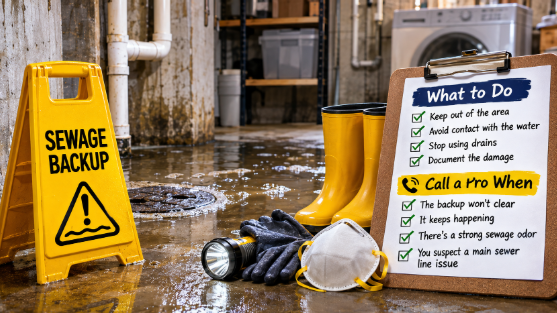
If sewage is coming up through a basement drain or toilet, stop using every drain in the house, keep people and pets out of the room, and do not wade in to clean it up. Those three moves limit how far the contamination spreads and how many people are exposed. Everything after that depends on how much water there is and what it has touched.
This guide explains what to do about a sewage backup in the basement, in order: the first few minutes, the paperwork, what can be saved, and the point where cleanup stops being a weekend project. It also covers why sewage is treated so differently from water from a burst pipe.
What to Do First When Sewage Backs Up in Your Basement
Stop adding water to the system, get everyone out of the affected area, and deal with electrical hazards before anything else. The order matters, because each step protects the one that follows.
- Stop using water
Do not flush toilets, run taps, do laundry or start the dishwasher. Every gallon that goes down a drain can end up on your basement floor.
- Keep people and pets out
The Centers for Disease Control and Prevention advises keeping children and pets away from the affected area until cleanup is finished. Close the basement door if you can.
- Think about electricity before anything else
If water is near outlets, appliances or the breaker panel, do not step into it. If you can reach the main panel without touching water, switch off power to the basement. If you cannot, call your utility or an electrician.
- Add airflow from a dry spot
Open a window or door that you can reach without walking through the water.
- Wear protection if you must go in
The agency’s guidance for sewage cleanup is rubber boots, rubber gloves and goggles. Wash your hands afterward, and wash the clothes you wore in hot water and detergent, separate from the rest of the laundry.
Then make a call. Even if you plan to handle some of the cleanup yourself, a quick conversation with a restoration company or your sewer utility early on saves hours later.
Why Sewage Water Is Different From Other Water Damage
Sewage is classed as the most contaminated kind of water damage because it carries disease-causing organisms. A leaking supply line and a backed-up sewer line can leave the same puddle on the floor, but they are not the same problem.
Restoration professionals sort water into three categories. Category 3, often called black water, is the worst. One university water damage guideline describes it as grossly unsanitary water carrying pathogens, with sewage as a typical source. The same document notes that gray water left untreated for more than 48 hours can degrade into category 3. So a slow, ignored leak can eventually become a contamination problem too.
Appearance tells you very little. Category 3 is defined by where the water came from, not by color or smell. Water that looks fairly clear after a backup is still treated as contaminated.
The CDC makes a related point: the larger danger is usually getting contaminated material into your body, not simply touching the water. That is why handwashing, gloves and keeping food and drink out of the area matter so much. Open cuts need extra care, so wash them with soap and keep them covered.
Document the Damage Before You Move Anything
Take photos and video of the backup before you remove anything, because that record supports an insurance claim and helps a cleanup crew plan the job. It takes ten minutes and is very hard to recreate later.
Picture a family who comes home after a heavy storm and finds an inch of dirty water around the basement floor drain. Before touching anything, they walk the edge of the water with a phone and record the drain, the waterline on the walls and boxes, the lowest shelves and the furnace area. They then write a list of what was on the floor. That one pass gives them an inventory, a timeline and a clear picture of how far the water spread.
A few habits make the record more useful:
- Photograph each affected item from two angles and note roughly what it cost.
- Capture any visible waterline on walls or stored items.
- Keep receipts for emergency work, equipment and temporary housing if you need it.
- Note the time you first noticed the backup and when you stopped using water.
Call your insurer early, too. Coverage for sewer and drain backups varies from policy to policy, so read your declarations page or ask your agent what applies before you throw anything away. If you rent, tell your landlord in writing right away.
What Can Be Saved and What Has to Go
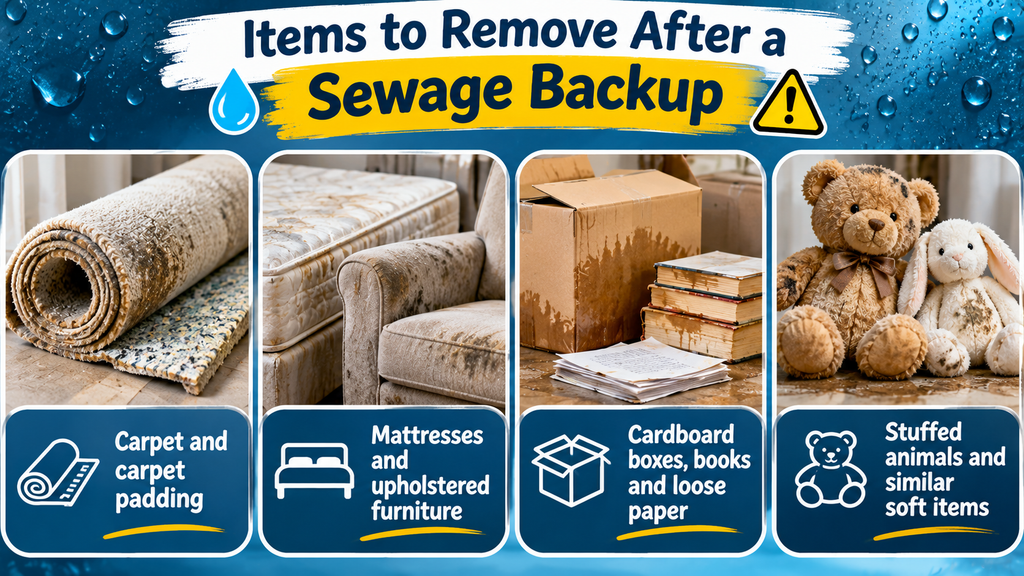
Hard, non-porous surfaces can usually be cleaned and disinfected, while porous materials that soaked up sewage generally have to be thrown away. The reason is simple: you can scrub the surface of a concrete floor, but you cannot scrub the inside of a carpet pad.
The CDC advises removing and discarding drywall and insulation that sewage or floodwater has contaminated. It also recommends cleaning up and drying out within 24 to 48 hours if possible, since moisture left behind invites mold. Other items that typically go in the discard pile include:
Items that usually can be saved include sealed concrete, metal shelving, hard plastic bins and appliance exteriors. Clean them with detergent and water first, then disinfect. Disinfecting a dirty surface does little, so the cleaning step comes first.
Take care with items you cannot replace, such as photos or documents. Bag them, label the bag and ask the restoration company or your insurer how to handle them. Do not try to rescue them by wiping them off yourself.
When to Call Professionals for Sewage Cleanup
Call a professional whenever sewage has spread beyond a small, hard-surfaced area or has soaked into carpet, drywall or anything porous. The Union of Concerned Scientists gives similar advice in its flooding health guide: if you suspect raw sewage has backed up into your home, hire professionals to do the cleaning.
Here are the signs that point to hiring help:
- The water covers more than a small patch, or has reached carpet, walls or stored belongings.
- More than one drain or fixture backed up, which suggests a larger blockage in the main line.
- Standing water is close to outlets, the furnace or the electrical panel.
- Someone in the household is very young, elderly or has a weakened immune system.
- The smell lingers after you have cleaned what you can see.
When you start calling around, ask whether the company handles sewage removal and water extraction as one job. A basement backup usually needs the contaminated water pumped out first and the area cleaned and decontaminated afterward, and it is easier to have one crew own both steps. Also ask how they train technicians for contaminated water, whether they will document the work for your insurer, and what they will do about materials that need to be removed.
A good crew will start by finding out how far the water spread, then extract it, remove what cannot be saved, clean, disinfect and dry the space. If a company wants to dry and rebuild without removing porous materials that sewage touched, ask them to explain why.
Find the Cause: Who Fixes the Pipe
A cleanup crew handles the mess, while a plumber or your city sewer department handles the reason it happened. Fixing one without the other can mean doing the whole job twice.
Two common causes are heavy rain that sends more water into the sewer system than it can carry, and tree roots that grow into pipes. Onondaga County’s sewer backup guidance lists both. Blockages from grease, wipes and other debris are common too.
A few clues help you work out where the problem sits:
- If only your basement drain is backing up, the blockage may be in your own sewer lateral, the pipe that runs from the house to the main.
- If neighbors have the same problem, the city main is a likelier suspect.
- If the backup followed a heavy storm, the public system may have been overloaded.
Responsibility depends on where the blockage is and on local rules, so call your sewer utility first. If it says the main is clear, a licensed plumber can scope your lateral with a camera and clear it.
How to Lower the Odds of a Repeat Backup
You cannot prevent every sewer backup, but a few upgrades and habits cut the risk. The best-known fix is a backwater valve, which Onondaga County describes as a device on the main exit pipe of the house with a flap that lies flat during normal use and closes if sewage tries to flow backward. The county also stresses that the valve needs regular inspection and cleaning to work when it counts.
Other steps are less costly:
- Flush only toilet paper and human waste. Wipes, even ones labeled flushable, and grease are frequent culprits.
- Watch for early warnings such as slow drains or gurgling sounds, and act on them.
- Have the lateral inspected with a camera if you have mature trees near the sewer line or an older home.
- Keep valuables and cardboard boxes off the basement floor, on shelving or in sealed plastic bins.
A plumber can tell you whether a backwater valve makes sense for your house and local code.
Frequently Asked Questions
Is it safe to stay in the house during a sewage backup?
It depends. If the backup is confined to the basement and you can keep the door closed, many households stay put. Leave if the smell spreads through the house, if there is an electrical risk, or if someone at home is especially vulnerable to infection. When in doubt, call your local health department.
Can I clean up a sewage backup myself?
A small spill on a hard floor can be handled with gloves, boots, goggles, detergent and a disinfectant. Anything that reached carpet, drywall or a large area is better left to professionals, because porous materials hold contamination you cannot see and cannot fully clean.
How long can sewage sit in a basement before it causes more damage?
As little time as possible. The CDC recommends drying out within 24 to 48 hours if possible to head off mold, and contamination can spread into more materials the longer water sits. Arrange cleanup the same day you discover the backup.
Does homeowners insurance cover a sewage backup?
Coverage varies by policy and insurer. Some policies treat sewer and drain backups as an optional add-on, and others may exclude them. Check your declarations page or call your agent before cleanup begins, and keep photos and receipts either way.
Why does sewage back up through the basement floor drain first?
Basement drains sit at the lowest point of most plumbing systems, so backed-up wastewater tends to surface there first. A blockage in the lateral, roots in the line or an overloaded public sewer can push water up through the nearest low opening.
Keep the Next Hour Simple
When sewage backs up, the instinct is to start mopping. Resist it. Stop water use, clear people and pets out, deal with the electrical risk, take photos, and then decide how much of the job is yours to handle.
Keep a short note on your phone with the numbers you will want in a hurry: your sewer utility, your insurance agent, a licensed plumber and a restoration company you have vetted. Having them in one place turns a stressful discovery into a series of manageable calls.