Moving Into a Second Home or Vacation Rental: Logistics for Furniture and Timing


Picture a couple who close on a beach condo in March and hope to stay there by Memorial Day. Their furniture sits in a garage several states away, the building wants advance notice for the elevator, and the rental calendar already shows guests arriving in June. Nothing is wrong, exactly, but every decision depends on another one.
Moving into a second home goes best when you split the job in two. Bring only the things that make the place feel like yours, buy or rent the bulky basics near the property, and schedule every delivery for a day when someone can be there to receive it. The sections below explain how to make those calls, plus how to handle timing, truck access, and what to leave behind between visits.
Moving Into a Second Home: What to Bring and What to Buy
Bring items that are personal, irreplaceable, or expensive to replace. Buy new for anything bulky, cheap to replace, or likely to wear out fast near the water. That one rule settles most of the argument.
Sort your belongings into three piles before you book anything:
- Bring: artwork you love, good kitchen knives, a favorite blanket, framed photos, hobby gear, and anything with sentimental value.
- Buy near the property: mattresses, sofas, outdoor furniture, shower curtains, basic cookware, and small appliances.
- Skip entirely: items you only use at your main home, plus anything that would be a real loss if sand, humidity, or a rental guest damaged it.
Here is a worked example. Say a used queen bed from your main home would cost a few hundred dollars to haul several hundred miles, and it is not worth much once it arrives. A new mattress delivered straight to the second home often costs about the same and arrives clean. When the moving cost approaches the replacement cost, buy new.
Coastal conditions matter too. Salt air, humidity, and sand tend to be hard on upholstery, electronics, and untreated wood. Furniture with washable covers, sealed finishes, or simple frames usually holds up better than delicate pieces.
Furnish in Phases Instead of All at Once
Furnish the beds, a basic kitchen, and one seating area first, then add the rest after a full stay shows you what is missing. Most owners overbuy on the first trip and discover on the third that the living room is laid out wrong.
A phased approach also protects your budget. Spend the first round on things you will use on day one: beds with real linens, towels, a coffee maker, lighting, and a few chairs. Hold off on rugs, wall decor, and extra storage until you have lived in the space.
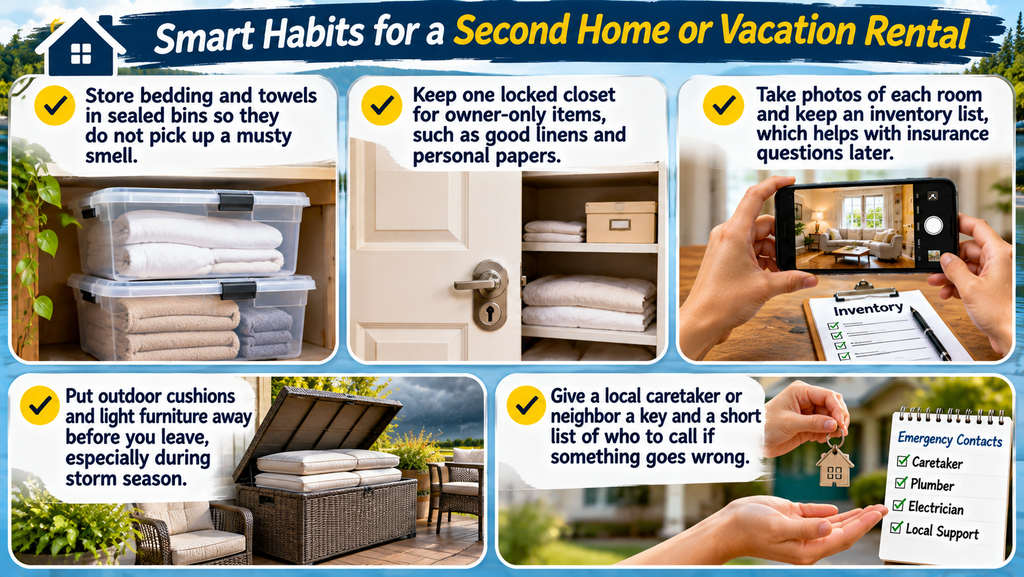
If the home will double as a vacation rental, the logic shifts a little. Durable, easy-to-clean furniture earns its keep, and matching sets make it simple to replace a damaged piece. Take dated photos of every room once it is furnished, and keep a simple list of what you own. Rules for short-term rentals vary by city, county, and building, so confirm what your area and association allow before you list the property.
How to Time Deliveries and the Move Itself
Schedule furniture deliveries and the move for a stretch when the home has no guests and you, or someone you trust, can be on site. An unattended delivery is how a sofa ends up in the wrong room, or on a porch in the rain.
Sequence matters as much as the date. Large items such as beds, sofas, and dining tables should arrive first, while the rooms are still empty. Boxes come next, and decor comes last. If everything lands on the same day, the movers and the delivery crews end up blocking each other.
Season matters in coastal areas. The Atlantic hurricane season runs from June 1 through November 30, and, according to NOAA’s Climate Prediction Center, most activity is expected in August, September, and October. Seasonal outlooks describe overall activity and do not predict where any single storm will land. For you, the practical takeaway is simple: build a spare day or two into the schedule during those months, and avoid stocking a freshly furnished home right before you leave town.
A few other timing habits help:
- Avoid holiday weekends and peak summer changeover days, when roads, parking, and building elevators are busiest.
- Leave a buffer of several days between your move and the first booked guest.
- Confirm delivery windows a couple of days ahead, and ask for a call before the truck arrives.
Truck Access, Elevators, and Building Rules
Before you pick a date, find out where a truck can park, how far items must be carried, and what the building requires. Access problems cause more delays at second homes than the move itself.
Start by asking the property manager or association a short list of questions:
- Is the elevator reservable, and does it need protective pads?
- Where is the loading zone, and are there time limits?
- Does the building require proof of insurance from movers?
- Are there quiet hours, gate codes, or restricted days?
- How tight are the stairwells, hallways, and doorways?
Beach towns add their own quirks. Narrow streets, shared driveways, gated communities, and soft sandy shoulders can keep a full-size truck from reaching the door. Measure doorways and stairwells before you buy a large sofa, not after.
It helps to work with movers who plan around these details by default. As one example, Destination Moving is a residential moving company serving Destin and nearby Northwest Florida communities, and its page on condo and townhome moving in Destin lists stairs, elevators, parking limits, and loading zones among the conditions it handles. Whichever company you choose, share the building’s rules with them early.
Hiring Movers for a Part-Time Home
Get a written estimate based on a real look at what you are moving, and confirm the company is registered for the type of move you are making. Those two steps weed out most of the problems people run into.
For a move that stays entirely inside Florida, the Florida Attorney General’s consumer guide to moving explains that intrastate movers fall under Chapter 507 of the Florida Statutes and are regulated by the state’s Department of Agriculture and Consumer Services. The guide recommends collecting at least three written estimates and notes that local moves are usually priced by the hour, while interstate moves are priced by weight and distance.
If your move crosses state lines, federal rules apply. The Federal Motor Carrier Safety Administration explains that a binding estimate guarantees you will not pay more than the quoted amount at delivery, while a non-binding estimate is not a guarantee. With a non-binding estimate, the mover cannot require more than 110 percent of that figure at delivery. For a house full of furniture headed to a second home, a binding estimate removes a lot of uncertainty.
Tell every mover that this is a second home. They will want to know who is meeting the crew, whether the utilities are on, and how the keys will change hands.
What to Leave in Place Between Visits
Leave furniture and linens that tolerate humidity and absence, and take home anything valuable, perishable, or sentimental. A second home spends most of the year empty, so plan for the empty months.
Ask a local HVAC professional how to handle air conditioning and humidity while the home is empty. The right setting depends on the building and the climate, and a wrong guess can mean mold by your next visit.
Frequently Asked Questions
Should I move my own furniture to a second home or buy new?
Buy new for bulky, inexpensive pieces like beds and sofas, especially when the distance is long. Move the items that matter to you, such as heirlooms, artwork, and favorites. If the cost to move something is close to the cost to replace it, replacing it is usually the easier choice.
How far ahead should I schedule deliveries for a vacation home?
Book as soon as your closing or move-in date is firm, because delivery slots can fill up. Retailers and delivery crews differ, so ask for the earliest available date and a window you can cover. Then confirm the appointment a couple of days before it happens and ask for a call before arrival.
What if I cannot be at the second home on delivery day?
Send someone you trust, such as a family member, a property manager, or a caretaker, with a room-by-room list of where things go. Give them your delivery contacts and a way to reach you. Avoid letting large items sit unattended outdoors, particularly during storm season or heavy rain.
Do I need a moving company registered in Florida?
For moves that stay entirely within Florida, yes. State law requires intrastate movers to register with the Florida Department of Agriculture and Consumer Services. If your move crosses state lines, check the company’s federal registration through the FMCSA’s Protect Your Move resources before you pay a deposit or sign anything.
When is the best time to move into a vacation rental?
Aim for a gap between guest stays, ideally midweek and outside the busiest travel weeks. Leave several days of buffer before the first booking so you can handle late deliveries, assemble furniture, and clean. During hurricane season, add an extra day or two in case plans change.
A Practical Way to Start
Start with the building and the calendar, not the furniture. Once you know when a truck can get to the door and what the property allows, the rest of the plan falls into place around those facts.
Then work through the piles: bring what matters, buy what is bulky, and furnish in phases. A second home does not need to be finished on the first trip. It needs a bed, a working kitchen, and a plan you can build on every time you return.