Standing tall on the roof, your chimney takes the full force of every storm, temperature drop, and passing creature. It is easy to view a chimney as a solid brick tower that needs no real attention until you want to light a fire. Behind that sturdy masonry exterior, however, sits a delicate venting system that keeps toxic fumes, smoke, and excess heat moving safely out of your living space. When external forces begin to compromise that system, performance drops fast, and safety risks skyrocket. As technicians who regularly inspect flues, ducts, and exhaust structures, we see how quickly Mother Nature and uninvited wildlife can turn a functional fireplace setup into a serious hazard.
Uninvited Guests and Their Structural Impact
To a displaced bird, squirrel, or raccoon, an unprotected chimney looks less like an exhaust stack and more like a luxury high-rise apartment complex. Wildlife seeks out warm, dark, shelter from predators, and open flues fit the description perfectly. Chimney swifts, in particular, love clinging to tile liners, while raccoons frequently set up nursery spaces right above the damper. The real trouble starts with the materials they bring along. Twigs, leaves, fur, and nesting insulation form dense plugs inside the flue. When you light a fire beneath a clogged flue, dangerous gases like carbon monoxide have nowhere to go but back into your living room, and dry nesting material acts as instant tinder for a chimney fire.
Accumulated Leaves, Twigs, and Flue Blockages
Even if animals manage to stay away, trees overhead present a constant challenge to flue health. Autumn leaves, pine needles, falling twigs, and airborne debris easily drop straight down an uncovered chimney crown. Over time, this organic matter settles into the lower bends or gathers on top of smoke shelves. When mixed with moisture and creosote, a byproduct of wood burning, debris forms a tar-like paste that clings to flue walls and narrows the passage. Beyond restricting airflow, decaying organic matter holds moisture directly against the chimney liner, accelerating chemical deterioration and weakening the internal structure month after month.
Rain, Freeze-Thaw Cycles, and Masonry Breakdown
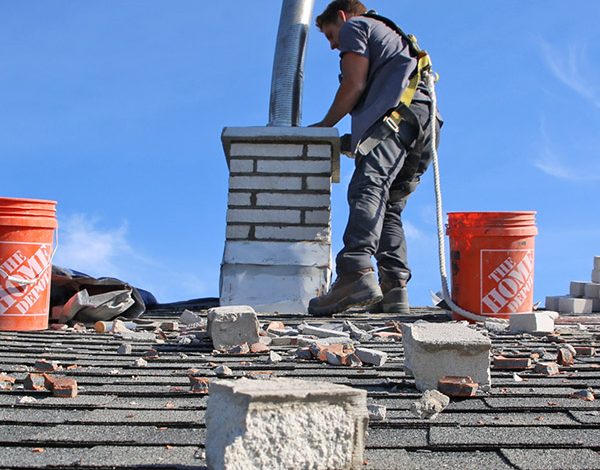
Water is by far the most destructive force a chimney faces over its lifespan. Bricks and mortar are naturally porous, meaning they absorb rainwater like a hard sponge. During winter months, absorbed water undergoes a freeze-thaw cycle, expanding when it turns to ice and contracting as it melts. This constant internal pressure causes brick faces to pop off, a process known as spalling, and grinds mortar joints down to dust. Left unaddressed, moisture leaks through cracked chimney crowns, rusts metal dampers, spoils fireplace fireboxes, and trickles down into interior walls, causing thousands of dollars in hidden structural damage before you ever notice a leak.
Wind, Storms, and External Hardware Failure
Gale-force winds, hail, and heavy snowstorms inflict direct physical damage to external chimney components. High winds can dislodge chimney caps, crack concrete crowns, or tear away flashing seals where the chimney meets the roof line. Once the cap is gone or flashing peels back, the chimney loses its primary umbrella. Rain pours straight down into the flue, while wind-driven debris packs into every opening. Additionally, storm damage often affects surrounding home systems, such as pulling dryer vent hoods off exterior walls or dislodging roof vent covers, creating multiple pathways for moisture and debris to enter your home ventilation network at once.
See also: How to Turn Challenges into Business Opportunities
Protecting Your Chimney and Air Delivery Systems
Preventing costly structural repair work comes down to establishing a strong defense before weather and wildlife strike. Installing a high-quality stainless steel chimney cap equipped with spark arrestor mesh is the single most effective way to keep animals and falling branches out of your flue. Pairing external protection with regular professional maintenance ensures that subtle liner cracks, creosote buildup, and moisture leaks are caught early. Comprehensive care from a skilled team like Warrior Air Duct & Chimney keeps your fireplace flue, air ducts, and appliance exhaust lines running cleanly, safely, and efficiently through every season.
Safeguarding Your Home for the Long Haul
Your chimney is vital to your property’s overall health and structural safety, but it cannot protect itself against weather, debris, and animal intrusion indefinitely. By inspecting your masonry, keeping flues capped, and removing internal blockages before firing up your hearth, you keep your home warm and your indoor air safe to breathe. Take time this season to look up at your roofline, check for signs of wear or animal activity, and schedule a professional inspection to keep your entire ventilation system in peak working condition.