How To Choose A Truck Or SUV For Austin, Texas Heat, Traffic, And Weekend Roads

Key Takeaways
- Choose for normal weekly driving, not for a rare once-a-year job.
- Austin heat, sudden rain, traffic, and limited parking can make size and climate features especially important.
- Compact SUVs and midsize trucks often provide a practical middle ground for local drivers.
- Full-size trucks and three-row SUVs are better suited to frequent towing, hauling, or larger families.
- Fuel, insurance, tires, maintenance, and financing affect the real budget as much as the purchase price.
Choosing between a truck and an SUV in Austin means thinking beyond horsepower, styling, or the biggest available screen. From packed commutes on Mopac and I-35 to Hill Country trailheads, lake weekends, and summer errands, the right vehicle has to fit the routines you actually keep. Shoppers comparing Austin Texas cars and trucks should prioritize daily usability before moving on to capability.
A vehicle that feels perfect for occasional towing may become frustrating if it is difficult to park downtown, expensive to fuel during a long commute, or unable to keep passengers comfortable in Central Texas heat. The best choice balances city maneuverability, cabin comfort, cargo needs, safety, and long-term cost of ownership.
Start With Daily Driving Needs
Write down how the vehicle will be used during a typical week. Consider commute mileage, school drop-offs, groceries, airport runs, pets, passengers, and the gear that must come along. Then separate those regular needs from occasional ones. If hauling lumber happens twice a year, buying a heavy-duty truck solely for that task may not offer the best daily value.
Austin drivers who regularly carry bikes to the Greenbelt, camping equipment to Enchanted Rock, or supplies for a home project may need flexible cargo space. Still, flexibility can come from roof rails, a hitch carrier, folding seats, or a small utility trailer, rather than automatically choosing the largest vehicle available.
Match Vehicle Size To Austin Driving
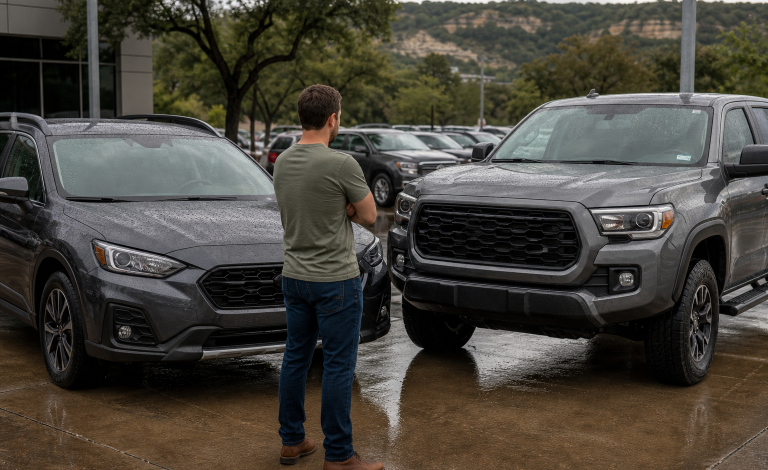
Vehicle dimensions become obvious quickly in Central Austin parking garages, older neighborhoods, narrow driveways, and busy grocery lots. A compact SUV is usually the easiest option for tight parking and errands. A midsize SUV offers passenger space without feeling overwhelming. Midsize trucks offer a useful bed while remaining more manageable than full-size pickups, while full-size trucks provide major capability but require more attention in crowded spaces.
Features That Matter Every Day
- Turning radius for parking lots and neighborhood streets.
- Clear backup cameras, parking sensors, and useful mirror coverage.
- Garage clearance, including mirror width and tailgate or hatch room.
- A seating position that provides confidence without sacrificing easy entry.
Prepare For Heat And Sudden Weather
Austin summers make air conditioning performance more than a luxury. Look for strong front cooling, rear vents for passengers, remote start or cabin pre-conditioning, and interior materials that are comfortable after the vehicle has sat outside. Ventilated seats can be worthwhile for drivers who spend extended time in traffic.
Hot pavement and abrupt rainstorms also make tire care important. Check tire pressure when tires are cold, use the pressure listed on the driver-side door label, and inspect tread before road trips. Reliable defrosting, effective wipers, and stable braking in wet conditions can make a meaningful difference when a dry afternoon turns into a fast-moving downpour.
Decide Between A Truck and an SUV
When A Truck Fits Best
A truck makes sense for people who routinely haul tools, landscaping supplies, dirty equipment, kayaks, motorcycles, or bulky materials that do not belong in an enclosed cabin. It can also be the better fit for frequent trailer use, provided the chosen configuration has enough towing and payload capacity.
When An SUV Fits Best
An SUV generally works better for families, commuters, and travelers who want covered storage for groceries, luggage, electronics, and sporting equipment. It is often quieter, easier to load, and more comfortable for rear-seat passengers. Many modern SUVs can still support light trailers and weekend adventure gear.
Compare Gas, Hybrid, And Electric Powertrains
Gasoline models remain straightforward for long Texas road trips and frequent towing. Hybrids can be especially appealing in stop-and-go traffic, where improved efficiency may offset their higher initial cost. Electric trucks and SUVs can work well for drivers with dependable home charging, but buyers should consider charging access, highway range, and how towing affects usable range.
Instead of comparing fuel economy alone, use a vehicle cost calculator to estimate how purchase price, annual mileage, energy use, and driving habits could affect long-term expenses. This creates a more useful comparison between a hybrid SUV, a gasoline truck, and an electric option.
Check Towing And Payload
Towing capacity is the maximum weight a properly equipped vehicle can pull. Payload is the weight carried by the vehicle itself, including people, cargo, accessories, and trailer tongue weight. Both matter. A truck may have an impressive towing figure but run out of payload once passengers, a bed cover, coolers, and hitch weight are added.
- Find the fully loaded trailer or equipment weight.
- Add passenger and cargo weight.
- Check the door-label payload limit.
- Confirm ratings for the exact engine, drivetrain, cab, and axle setup.
- Choose a practical margin rather than operating at the limit.
Evaluate Comfort And Cargo
Do not judge cargo capacity only by a brochure number. Sit in every seating position, adjust the front seat for the tallest regular driver, and then test rear legroom. Bring a child seat, stroller, work bag, or sports gear if possible. Also check bed height, hatch opening, tailgate operation, and whether groceries will stay secure.
For example, a household with two children, weekly grocery runs, and occasional camping trips may find a midsize SUV more practical than a large truck. Covered cargo space, easier child-seat access, and a more comfortable ride may outweigh the capability that is rarely used.
Review Safety And Visibility
Compare crash-test results, recalls, automatic emergency braking, blind-spot alerts, lane-support systems, and rear cross-traffic warnings for each specific model year. Vehicle safety ratings can help buyers compare crash performance and recall information before narrowing their shortlist.
During a test drive, check visibility in bright sun and shade. Make sure the roof pillars do not create major blind spots, the camera image stays clear, and all regular drivers can comfortably reach the pedals, steering wheel, screens, and climate controls.
Calculate Ownership Costs
Build a monthly budget that includes insurance, fuel or charging, maintenance, tires, registration, financing, parking, and accessories. Larger wheels, off-road tires, heavy-duty components, roof racks, bed covers, and towing equipment can all raise the real cost. Used-vehicle buyers should also inspect service records, warranty coverage, and vehicle history.
Take A Better Test Drive
Drive the vehicle in traffic, merge onto a highway, park in a tight space, test climate controls, connect a phone, and listen for wind or tire noise. If towing is important, inspect hitch access and camera views. A second drive at another time of day can reveal glare, heat buildup, or traffic frustrations that a quick dealership loop may miss.
Make The Final Choice With Confidence
The right truck or SUV for Austin, Texas, is the one that handles most real-life needs without adding unnecessary stress or expense. Prioritize the conditions you face every week, including heat, traffic, parking, passengers, cargo, and weekend travel. A realistic shortlist and a thorough test drive will make the final decision clearer.