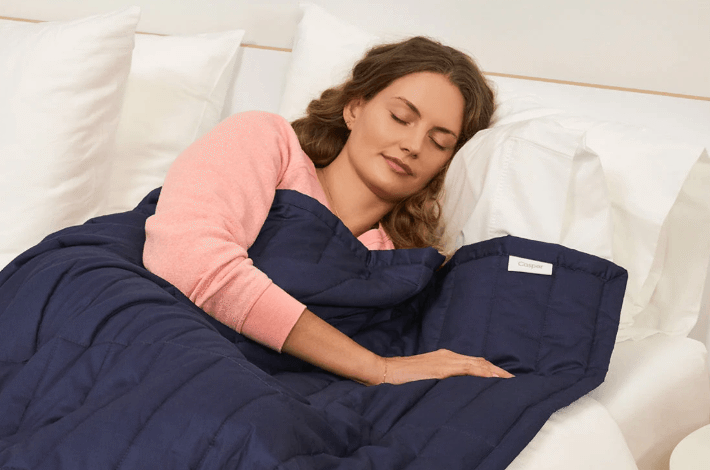
The weighted blanket market has expanded to the point where the range of options is genuinely confusing. Weight, fill material, fabric type, and size all interact in ways that affect whether a specific blanket works for a specific person — and what works for one person may be wrong for another.
Getting the Weight Right
A weighted blanket that’s right for you starts with weight selection. The 10 percent of body weight rule is a starting point, not a formula — some people prefer slightly lighter options that feel more like a hug than a press, while others find that heavier blankets are more effective for their specific needs.
If you’ve never used a weighted blanket, starting at the lower end of the recommended range and moving up if needed is a lower-risk approach than committing to the heaviest option immediately.
Fill Materials
The Sleep Foundation’s review of weighted blanket research notes that glass bead fill distributes weight more evenly and runs quieter than plastic pellet fill — relevant if you’re a light sleeper sensitive to movement noise.
See also: Improving Your Pet’s Quality of Life Through Daily Routines
Heat Considerations
Weighted blankets run warmer than standard blankets because of their density. If you sleep warm, look specifically for weighted blankets with moisture-wicking or cooling fabric options. Minky fabric is soft and comfortable but adds some warmth — if temperature regulation is a priority, verify the fabric’s thermal properties before purchasing.
Size Matters More Than It Seems
A weighted blanket sized for a twin bed on a queen bed won’t drape correctly — the weight concentrates in the center rather than distributing across the body. Match the blanket size to your bed size, not to your body size, for best results.