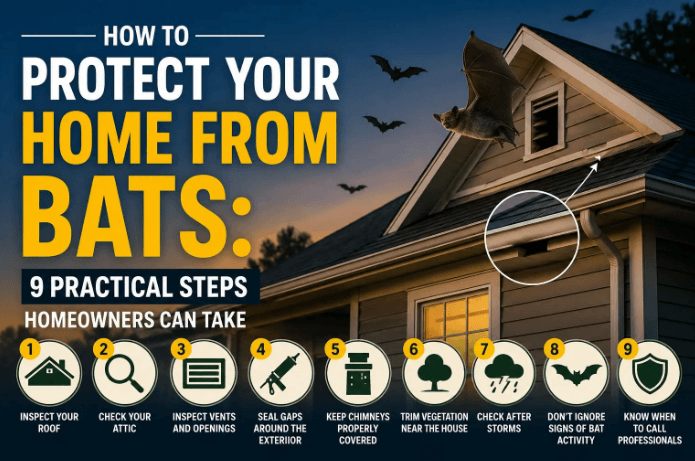
How to Protect Your Home From Bats: 9 Practical Steps Homeowners Can Take

Bats can be beneficial to the environment because they help control insect populations, but having them inside your home is a different situation. When bats find their way into an attic, roof cavity, chimney, or another enclosed area, they can create problems that homeowners may not notice immediately. If bats have already entered your property, professional bat removal services can help identify possible entry points and determine an appropriate way to address the problem.
Fortunately, many wildlife problems can be reduced through regular home maintenance. Small openings around the roof, vents, siding, and other exterior areas can give bats access to parts of a house. Keeping these areas in good condition can make your home less vulnerable to unwanted wildlife.
1. Inspect Your Roof for Small Openings
The roof should be one of the first areas homeowners inspect when looking for potential wildlife entry points.
Bats can use surprisingly small openings to gain access to an attic or roof cavity. Damaged shingles, loose flashing, gaps around roof edges, and deteriorating soffits can all create opportunities for wildlife to enter.
During a routine exterior inspection, look for:
- Missing or damaged shingles
- Loose or deteriorated flashing
- Gaps around roof vents
- Openings near the roofline
- Damaged soffits and fascia
- Spaces between roofing and exterior walls
Roof problems can become worse when they are ignored, especially after heavy rain, strong winds, or other severe weather. Finding small openings early can prevent them from becoming larger problems later.
2. Check Your Attic Regularly
Attics can be attractive shelter for bats because they are usually dark, quiet, and protected from outdoor weather.
Homeowners should occasionally inspect accessible attic areas for signs of wildlife activity. Depending on the situation, signs may include droppings, unusual sounds, staining around openings, or disturbed insulation.
However, not every attic noise means bats are present. Scratching or movement could come from several types of wildlife. Instead of guessing, pay attention to repeated activity and investigate the possible source.
Regular attic inspections can also reveal unrelated home-maintenance problems such as moisture damage, roof leaks, or deteriorating insulation.
3. Inspect Attic Vents and Other Openings
Proper ventilation is an important part of maintaining a healthy home, but exterior vents can also become potential wildlife entry points when screens or covers are damaged.
Check attic vents, ridge vents, exhaust outlets, and other openings around the exterior of the house. Look for broken screens, loose covers, or gaps around the edges.
Any repair should maintain the purpose of the opening while preventing animals from entering. Blocking a ventilation system completely can create moisture and airflow problems, so homeowners should avoid using makeshift solutions that interfere with proper ventilation.
4. Look for Gaps Around the Exterior
A home’s exterior contains many areas where different materials meet. Over time, these joints can develop cracks or gaps because of weather exposure, age, and normal movement of building materials.
Pay particular attention to:
- Areas where siding meets the roof
- Spaces around utility lines
- Gaps near windows and doors
- Areas around chimneys
- Damaged fascia and soffits
- Openings around exterior fixtures
Sealing unnecessary gaps is an important part of home maintenance, but homeowners should first determine whether wildlife is currently using an opening.
If bats are already inside, simply sealing an active entry point can create another problem by trapping animals within the structure. Identifying the situation before making repairs is therefore important.
5. Keep Your Chimney Properly Protected
Chimneys can provide another possible route into a home. A properly fitted chimney cap can help prevent wildlife from entering while allowing the chimney to function as intended.
Inspect the cap periodically for damage, corrosion, or movement. If it is missing or damaged, repairing or replacing it can improve both home maintenance and wildlife prevention.
A chimney should also be inspected according to the manufacturer’s or a qualified professional’s recommendations, particularly if it is regularly used.
6. Maintain Trees and Vegetation Around the House
Landscaping can affect how easily wildlife reaches different parts of your property.
Branches that touch or hang very close to the roof can provide animals with easier access to elevated areas of the home. Dense vegetation can also make exterior inspections more difficult.
You do not necessarily need to remove trees simply because they are near your house. Instead, keep branches properly trimmed and maintain enough clearance to make the roofline and exterior easier to inspect.
Good landscaping maintenance can support both the appearance of your property and its overall protection against unwanted wildlife.
7. Inspect Your Home After Severe Weather
Storm damage is one of the easiest ways for new wildlife entry points to appear.
Strong winds, hail, falling branches, and heavy rain can damage shingles, flashing, vents, soffits, and other parts of a home’s exterior. A small opening created during a storm may go unnoticed until wildlife discovers it.
After severe weather, inspect the areas that are easy and safe to reach. Look for obvious damage around the roofline, vents, siding, and other exterior components.
Addressing storm damage quickly can help prevent water intrusion and reduce the chance of wildlife finding a new way into the structure.
8. Pay Attention to Signs of Bat Activity
Seeing bats around your property does not automatically mean they are living inside your home. Bats naturally fly around houses while searching for insects and shelter.
The situation deserves closer attention when you repeatedly see bats emerging from or returning to the same area of the building.
Other signs that may justify an inspection include:
- Droppings near a suspected opening
- Repeated activity around the roofline
- Sounds coming from an attic or wall area
- Staining around an exterior gap
- Visible openings leading into enclosed spaces
The important thing is to determine whether bats are actually entering the structure rather than assuming that every bat seen outdoors is a sign of an infestation.
9. Avoid Sealing an Active Bat Entry Point
One common mistake homeowners make is finding a hole and immediately sealing it.
That approach can be risky if bats are already inside the structure. Depending on the circumstances, closing an active opening may prevent animals from leaving and can turn a relatively simple wildlife issue into a more complicated one.
Before permanently closing a suspected entry point, it is important to understand whether it is being used and whether animals are inside.
Professional wildlife inspection can help homeowners determine what is happening and what type of exclusion approach may be appropriate.
See also: Protect Your Home: The Importance of Regular Gutter Maintenance
When Should You Consider Professional Help?
Preventive maintenance can reduce many wildlife problems, but an established bat issue may require more careful attention.
If bats have entered an attic, wall cavity, or another enclosed part of your home, the solution is not always as simple as finding one hole and closing it. There may be multiple entry points, and the condition of the building can affect how the problem should be handled.
A professional inspection can help identify potential access points and determine whether exclusion, repairs, or other measures are appropriate.
This is especially important when homeowners are unsure whether bats are still inside or when activity appears to be coming from an inaccessible part of the structure.
Make Bat Prevention Part of Regular Home Maintenance
Protecting a home from bats does not mean eliminating bats from the surrounding environment. Instead, the goal is to prevent them from gaining access to areas where they can become a problem.
Regular roof inspections, proper attic ventilation, maintained chimney caps, secure exterior openings, and well-maintained landscaping can all contribute to a better-protected home.
These checks can also catch other common home problems, including roof damage, moisture intrusion, deteriorating siding, and damaged vents.
What to Do If Bats Are Already Getting Inside
If you notice repeated bat activity around your roof or attic, do not wait until the problem becomes more difficult to manage.
Start by observing where the activity is occurring and checking the exterior for obvious signs of damage. Avoid disturbing wildlife or sealing suspected openings until you understand whether animals are using them.
If bats have already entered the structure, experienced bat removal services can help assess the situation, locate potential entry points, and recommend an appropriate exclusion solution.
Once the immediate wildlife issue has been addressed, repairing damaged roofing, sealing unnecessary gaps, maintaining vents, and keeping the exterior in good condition can help reduce the chances of the problem returning.
A well-maintained home is not only better protected from weather and structural problems; it is also less inviting to unwanted wildlife.