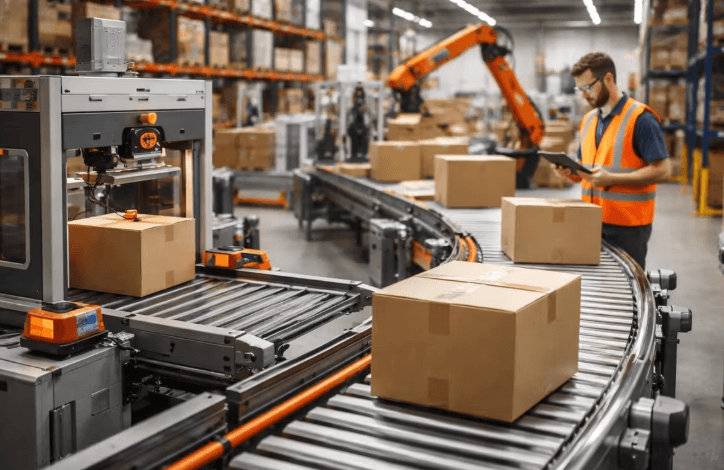
Every growing manufacturer eventually hits the same wall. Orders increase, the product itself is ready to ship in larger volumes, but the packaging step becomes the bottleneck that slows everything else down. This is usually the point where a business starts seriously looking at a cellophane overwrapping machine instead of continuing to wrap products by hand or with a basic setup that was fine for smaller runs.
Why Speed Numbers Matter More Than They Seem
It is tempting to treat the speed rating on a piece of packaging equipment as a simple bragging point, but it actually shapes a lot of downstream decisions. If a machine wraps far fewer units per minute than the rest of the line can produce, wrapping becomes the choke point that everything else has to wait on, no matter how efficient the filling or assembly stages are. On the other hand, buying far more capacity than a business currently needs ties up capital that could be used elsewhere.
Overwrapping equipment built for higher output can typically handle a range from around forty units per minute up to three hundred or more, depending on the model and configuration. That range matters because it means a business does not have to choose between a machine built for a small operation and one built for a massive one. Matching the machine’s capacity to actual current output, with some room for growth, tends to be the smarter move rather than buying for a volume you might reach someday.
Fitting Into an Existing Line
Speed alone does not solve the problem if the machine cannot actually sit within the rest of the production line. Modern equipment is generally designed to integrate with conveyors and other packaging stations, so that products move from filling or assembly straight into wrapping without a manual handoff in between. This kind of integration is where a lot of the real efficiency gain actually comes from, since removing a manual step often matters more than raw wrapping speed on its own.
JOCHAMP’s cellophane overwrapping machine range is built with this kind of line integration in mind, with the company noting that its equipment is designed to fit into existing workflows rather than requiring a business to redesign its entire packaging area around one new machine. For a business already running a functioning line, this matters just as much as the headline speed figure, since a machine that requires major structural changes to install can end up costing far more in downtime and reconfiguration than the equipment itself.
See also: How to Turn Challenges into Business Opportunities
Protecting Quality While Moving Faster
Speed without consistency is not actually useful, since a fast machine that produces uneven seals or damaged wraps just moves the problem further down the line to quality control or customer complaints. A well designed high speed overwrapper needs to hold sealing quality steady across the entire range it operates at, protecting products from theft, damage, moisture, and dust regardless of whether it is running at the lower or upper end of its speed capability.
This is where build quality and speed actually intersect. A machine can be rated for a high output number, but if it cannot maintain a tight, reliable seal at that pace, the rating does not mean much in practice. It is worth asking a supplier directly how sealing quality is maintained at higher speeds, rather than assuming that a top line number automatically translates to reliable performance on your specific product.
Planning for Where You Are Headed
The businesses that get the most out of this kind of investment are usually the ones that think a step or two ahead rather than buying purely for today’s output. A machine chosen with some headroom for growth, and one that can be adjusted for different product sizes as a catalog expands, tends to serve a business far longer than one bought to match exactly where things stand right now. Packaging capacity is one of those areas where planning slightly ahead of current demand almost always pays off compared to having to replace equipment again in a year or two.